TFG USA Newsroom & Insights
Metal Manufacturing Blog & Resources
Expert technical articles, design guides, and industry news on custom metal solutions.
Blog
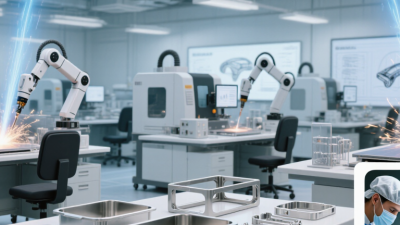
China Top 10 Medical Sheet Metal Fabrication Manufacturers
China’s medical manufacturing sector has become a serious source of precision enclosures, instrument panels, chassis, brackets, and internal frames. This article examines the China Top 10 Medical Sheet Metal Fabrication Manufacturers through practical criteria. These include material traceability, CNC accuracy, clean production controls, welding quality, surface finishing, documentation, and medical-device experience.
Medical Sheet Metal Fabrication is not ordinary metalwork. A cabinet may protect sensitive electronics, while a small bracket can affect alignment, sterilization access, or operator safety. Stainless steel edges must feel smooth. Ventilation slots must remain consistent. Welds should resist corrosion after repeated cleaning cycles.
Dr. Jeff Shuren, former director of the FDA’s Center for Devices and Radiological Health, has emphasized, “Quality cannot be tested into a product; it must be built into the product.” That principle matters throughout supplier selection. A polished sample is not enough. Buyers should review inspection records, process controls, engineering communication, and change-management practices.
This ranking is intended as a useful starting point, not a permanent verdict. Supplier capabilities can change. Public information can also be incomplete. Some manufacturers may appear strong online but provide limited evidence of medical-sector performance. That deserves caution.
Look beyond price. Ask how each company handles thin-gauge distortion, tight tolerances, laser-cut burrs, EMI shielding, and packaging protection. The strongest suppliers usually combine experienced engineers, stable production teams, and disciplined inspection. They also admit problems early. That small habit can prevent expensive failures later.
Read more »
 By:Lila
- October 26, 2026
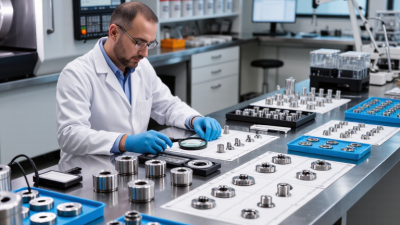
How to Choose Medical Device Metal Injection Molding in 2026
Choosing Medical Device Metal Injection Molding in 2026 requires more than comparing quotations or machine specifications. It demands evidence across materials, tooling, validation, cleanliness, and long-term supply. Grand View Research’s recent metal injection molding analysis identifies healthcare as a high-potential application area. MarketsandMarkets also reports continued demand for compact, complex, and repeatable medical components. However, market forecasts vary. That inconsistency deserves attention.
A practical evaluation begins with the part itself. Examine wall thickness, sharp internal features, tolerances, surface finish, and expected annual volume. A tiny surgical component may leave the mold with a smooth surface, yet still fail after debinding or sintering. The hidden risk is process variation. MPIF technical guidance repeatedly highlights feedstock control, debinding, sintering, and dimensional consistency as critical MIM stages. Quality cannot be inspected into a poorly controlled process.
Frank Petzoldt, a recognized MIM industry expert, has emphasized, “MIM is a process chain, not simply a molding step.” That principle should guide supplier selection. Ask for capability studies, material certifications, traceability records, and representative medical production history. Confirm alignment with ISO 13485 systems and applicable regulatory expectations, including FDA quality requirements where relevant. Do not accept impressive samples alone. Request evidence from production.
The right supplier explains trade-offs clearly. They should discuss titanium, stainless steel, cobalt-chromium, or other alloys without overselling one option. They should also expose weaknesses. Tooling may be expensive. Design changes can be painful. Lead times may shift.
That is the reality.
This guide explains how to evaluate Medical Device Metal Injection Molding partners in 2026, using technical evidence, supplier experience, and measurable risk controls.
Read more »
 By:Chloe
- October 21, 2026
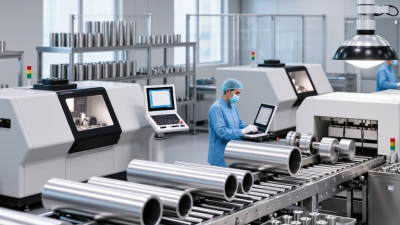
China Top 10 Medical Metal Extrusion Suppliers
China’s medical manufacturing sector has become an important source of precision components, including tubes, profiles, and miniature structural parts. This guide introduces China’s top 10 Medical Metal Extrusion suppliers through practical, procurement-focused criteria. The review considers alloy capability, dimensional control, surface finish, tooling experience, cleanroom practices, inspection systems, and documented traceability.
Medical Metal Extrusion demands more than a polished sample. A titanium tube may look simple. Inside, wall thickness, concentricity, grain structure, and residual stress can affect later assembly and clinical performance. Supplier selection must therefore examine actual process evidence, not only website claims. ISO 13485 certification can support confidence, but it does not replace technical audits, sample testing, or clear communication.
Dr. Donald G. Baird, a recognized extrusion-processing scholar, offers a useful principle: “Processing history becomes material history.” That observation matters deeply in medical production. Heat cycles, lubrication, reduction ratios, and cleaning steps can leave measurable effects on the finished metal component.
Details matter.
The strongest suppliers usually explain their tolerances clearly. They also identify material grades, inspection equipment, and validation boundaries without hiding behind vague language. However, no ranking is permanent. Capacity, lead times, export experience, and engineering support can change quickly. Some suppliers may excel at nickel alloys, while others perform better with stainless steel or titanium.
This introduction is not a substitute for supplier qualification. It is a starting point for disciplined comparison. Buyers should verify certificates, review drawings, request representative samples, and confirm whether production controls match the intended medical application. Mistakes remain possible, especially when attractive pricing distracts from process risk.
Read more »
By:Lila
- October 16, 2026
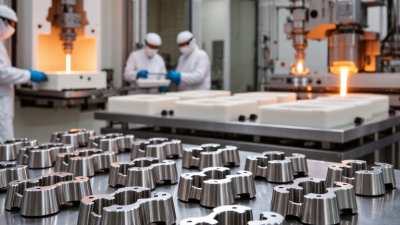
Why Choose Medical Investment Casting for Global Sourcing?
Why Choose Medical Investment Casting for Global Sourcing?
Medical Investment Casting is becoming a practical choice for companies seeking precise, repeatable, and internationally scalable production. Grand View Research reported that the global investment casting market reached approximately USD 16.5 billion in 2023. Its forecast also indicates continued growth through 2030, supported by aerospace, healthcare, and advanced manufacturing demand. However, market estimates vary between research firms. Buyers should examine assumptions, not only headline figures.
The Medical Investment Casting process can produce complex stainless-steel and cobalt-chromium components with thin walls, smooth surfaces, and reduced machining waste. Think of a small orthopedic instrument with narrow channels and polished edges. These details matter during assembly and cleaning. The Investment Casting Institute’s technical guidance highlights dimensional control, shell quality, alloy selection, and process consistency as critical production factors. John Campbell, a recognized casting researcher, summarizes the principle clearly: “Castings are made by controlling liquid metal, not merely pouring it.”
Global sourcing adds another layer of responsibility. ISO 13485 certification, material traceability, inspection records, and supplier audits should support every purchase decision. A lower quoted price can disappear after rework, delayed validation, or inconsistent batches. That lesson is easy to overlook. Experienced sourcing teams therefore compare total cost, process capability, documentation quality, and communication speed. Medical Investment Casting is not automatically the best answer for every component. Yet, when design complexity and repeatability matter, it offers a credible path toward reliable medical manufacturing across borders.
Read more »
By:Lila
- October 11, 2026
How to Choose Industrial Sand Casting Suppliers in 2026?
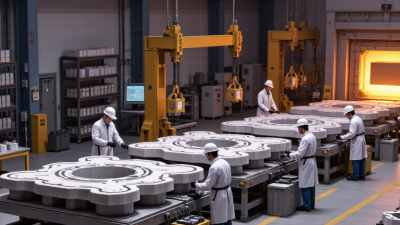
Choosing an Industrial Sand Casting supplier in 2026 requires more than comparing prices and polished websites. The right partner must prove consistency under real production pressure. Experienced buyers examine alloy control, pattern accuracy, sand preparation, machining capability, and inspection discipline. They also ask how the supplier handles defects when a casting fails. A trustworthy foundry answers clearly, with records.
Professor John Campbell, a widely cited casting authority, stated: “Good castings are made in the mould, not in the foundry.” This principle remains practical today. During supplier visits, look for controlled pouring temperatures, clean furnace practices, labelled test coupons, and traceable material certificates. Ask to review dimensional reports from parts similar to yours. Inspect the storage of patterns and cores. Small details often reveal large risks.
Do not trust certificates alone.
A supplier may hold impressive approvals yet struggle with your geometry, alloy, or annual volume. Request sample castings, process-flow documents, rejection data, and realistic lead-time commitments. Discuss tooling ownership before production begins. Confirm how changes will be approved and recorded. Sustainable sand reclamation and energy monitoring also deserve attention in 2026.
The evaluation process is not perfect. Buyers can overvalue low unit costs or mistake confident sales language for technical capability. That is a common weakness. A stronger decision balances evidence, communication, engineering support, and total lifecycle cost. The best Industrial Sand Casting supplier is not always the largest. It is the one that can repeatedly deliver sound castings, explain problems honestly, and improve when the evidence demands it.
Read more »
By:Lila
- October 6, 2026
Why Choose Industrial Component Forging for Global Sourcing?
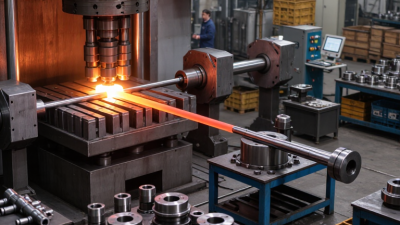
Industrial Component Forging offers global buyers a practical route to stronger, more consistent parts. The process shapes heated metal under controlled pressure, refining its grain structure and improving resistance to fatigue, impact, and wear. These advantages matter in shafts, flanges, gears, brackets, and other components exposed to demanding service conditions. A forged part may appear simple, yet its performance depends on material selection, die design, temperature control, and heat treatment.
Experienced sourcing teams evaluate more than unit price. They review supplier qualifications, production records, inspection equipment, and traceability systems. Material certificates, dimensional reports, hardness tests, and non-destructive inspections provide useful evidence. They also compare tooling costs, minimum order quantities, packaging methods, and realistic delivery schedules. Clear drawings and defined acceptance criteria reduce misunderstandings across borders. Details decide.
Industrial Component Forging can support reliable supply, but it is not a universal answer. Complex shapes may require machining or another manufacturing route. Initial tooling investment can also challenge smaller orders. That limitation deserves honest attention. Suppliers should demonstrate process capability through samples, audits, and documented corrective actions. Buyers should confirm applicable standards and customer requirements before production begins. In practice, the best global sourcing decision combines engineering judgment, verified supplier experience, and transparent communication. Claims should be tested, not simply repeated.
Read more »
By:Lila
- October 1, 2026

7 Renewable Energy CNC Machining Tips for Buyers
Renewable Energy CNC Machining supports components used in wind turbines, solar tracking systems, hydropower equipment, and energy storage. These parts may face vibration, weather, heat, or repeated movement. A machined mounting bracket, for example, must fit its assembly and withstand its working environment. Small errors can cause delays during installation or maintenance. Details matter.
For buyers, choosing a supplier involves more than comparing quoted prices. Material grade, machining capability, dimensional inspection, surface finish, and production capacity all affect part performance. Ask how critical dimensions are measured and whether inspection records can be provided. For outdoor components, discuss corrosion protection and the intended service conditions. Be specific. A drawing alone may not explain every requirement.
The following seven tips offer a practical framework for reviewing suppliers, quotations, and sample parts. They cover design readiness, material selection, tolerances, quality checks, communication, lead times, and long-term value. No single checklist fits every project; a prototype decision may differ from a high-volume order. Even careful planning can miss something. Buyers should revisit assumptions when designs or operating conditions change, and confirm important specifications with qualified engineering teams. Reliable sourcing depends on clear evidence, realistic expectations, and open discussion—not promises alone.
Read more »
 By:Sophie
- September 26, 2026
What Is Construction Equipment Metal Casting?
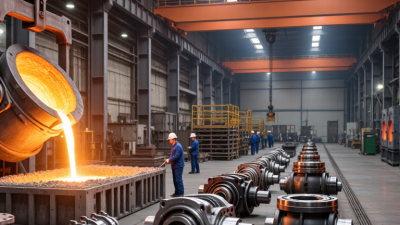
Construction Equipment Metal Casting is the process of forming durable machine parts from molten metal. It supports excavators, loaders, cranes, bulldozers, and mining equipment. Common castings include engine blocks, hydraulic valve bodies, counterweights, track links, and gearbox housings.
The process begins with a pattern that defines the component’s shape. A sand, ceramic, or permanent mold then receives carefully controlled molten iron, steel, or aluminum. After cooling, workers remove the casting, clean its surfaces, and machine critical dimensions. Quality depends on more than shape. Metal temperature, filling speed, mold strength, cooling behavior, and chemical composition can influence cracks, pores, distortion, and fatigue life. As casting expert John Campbell has stated, “The quality of a casting is determined by the quality of the liquid metal.”
That principle matters in heavy equipment. A hidden pore near a hydraulic passage can become a leak. A small shrinkage defect may grow under repeated impact. Inspection methods such as dimensional checks, hardness testing, ultrasonic testing, and radiography help reveal these risks. Still, inspection cannot repair poor process control. That is an uncomfortable truth.
A reliable supplier should document alloy grades, melt analysis, mold parameters, heat treatment, and traceability. Engineers must also match the casting design with real field loads, vibration, dirt, and temperature changes. Not every heavy part needs the thickest wall. More metal can increase weight, cost, and internal stress. Good design remains a compromise. This guide explains how Construction Equipment Metal Casting works, where it performs best, and why small manufacturing decisions can determine long-term machine reliability.
Read more »
By:Lila
- September 21, 2026
Top Custom Agricultural Wire Forming Manufacturers
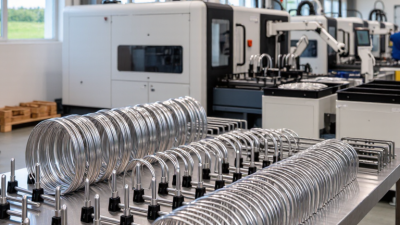
Modern farms depend on small metal parts that rarely attract attention. Trellis hooks, livestock-panel clips, crop-support frames, and protective guards must withstand rain, vibration, soil, and repeated handling. Custom Agricultural Wire Forming turns standard wire into precise, application-specific components. The right manufacturer can improve assembly speed, field reliability, and maintenance control.
Industry evidence supports this focus on practical automation. FAO’s The State of Food and Agriculture 2022 explains how agricultural automation can raise productivity and reduce physically demanding work. The OECD-FAO Agricultural Outlook 2024-2033 also emphasizes efficiency, resilient supply chains, and smarter input use. These priorities affect every wire component, even a simple bent hook. A weak bend may open under load. Poor coating may fail after one wet season. Small errors become expensive at scale.
This guide examines leading manufacturers through engineering capability, material knowledge, forming accuracy, tooling support, and quality systems. Grand View Research and MarketsandMarkets reports on metal forming and agricultural equipment also point toward growing demand for customized, durable production solutions. However, market rankings are never perfect. A large supplier may lack flexibility. A smaller specialist may offer better samples and faster design feedback. Experience matters here. Ask for material certificates, tolerance data, corrosion-testing methods, and production samples before choosing a partner. Look closely. The best supplier is not always the most visible one. It is the manufacturer that understands field conditions and delivers consistent parts when the order becomes difficult.
Read more »
By:Lila
- September 16, 2026

China Top Agricultural Metal Forging Suppliers for Global Buyers?
As the demand for high-quality agricultural products continues to escalate, the role of Agricultural Metal Forging has become increasingly crucial. Industry reports indicate that the global agricultural metal forging market is projected to reach $XX billion by 2025, highlighting its significance in modern farming practices. According to Richard Thompson, an expert in agricultural manufacturing, “The strength and precision of forged metal components directly impact agricultural productivity.” This underscores the importance of reliable suppliers in this sector.
China emerges as a key player among global suppliers of agricultural metal forging products. With advanced manufacturing technologies and a robust supply chain, Chinese companies dominate this market. They offer a wide range of forged components, including tools and machinery that enhance farming efficiency. However, as buyers seek quality and durability, choosing the right supplier remains a challenge.
Consideration should be given to factors such as material quality and production standards. Additionally, many global buyers encounter difficulties in navigating supplier reliability and consistency. Reflecting on these issues, experts emphasize the need for thorough vetting of suppliers to ensure optimal partnerships in the agricultural metal forging field.
Read more »
By:Chloe
- August 18, 2026

China Best Agricultural Equipment Sand Casting Solutions for Buyers?
When it comes to sourcing Agricultural Equipment Sand Casting solutions, buyers often face challenges. The market is vast, with many options available. Understanding the nuances of this industry is crucial. China is known for its advanced manufacturing and casting techniques. As buyers, your requirements must align with suppliers’ capabilities.
Quality is vital in Agricultural Equipment Sand Casting. Many Chinese manufacturers have the expertise needed to produce durable components. However, not all suppliers offer the same level of reliability. Evaluating their experience and past projects will provide insights into their capabilities. This approach helps navigate potential pitfalls.
While prices can be attractive, caution is essential. Selecting a supplier should go beyond cost considerations. Look for manufacturers with a proven track record. Make inquiries about material standards and production processes. This due diligence can prevent disappointment. In your quest for the best Agricultural Equipment Sand Casting solutions, keep these factors in mind.
Read more »
By:Chloe
- August 18, 2026

Top Agricultural Machinery Metal Casting Suppliers in China?
The demand for Agricultural Machinery Metal Casting is surging in China. This growth stems from the increasing need for reliable machinery in agriculture. Metal casting is essential for creating durable and efficient equipment.
In China, several suppliers excel in providing high-quality metal castings. These companies leverage advanced technology and skilled labor to meet the rigorous demands of the agricultural sector. They produce components that withstand heavy use in diverse farming environments. However, not all suppliers maintain consistent quality. Choosing reliable partners can be challenging.
Understanding the landscape of agricultural machinery casting suppliers can guide better decision-making. It is vital to evaluate their experience and expertise. A supplier's track record often reflects their ability to deliver quality products. Observing their past projects can provide insights into their capabilities and reliability. Ultimately, investing time in research can yield significant benefits for those in the agricultural machinery industry.
Read more »
By:Chloe
- August 18, 2026