Metal Manufacturing Blog & Resources
Expert technical articles, design guides, and industry news on custom metal solutions.
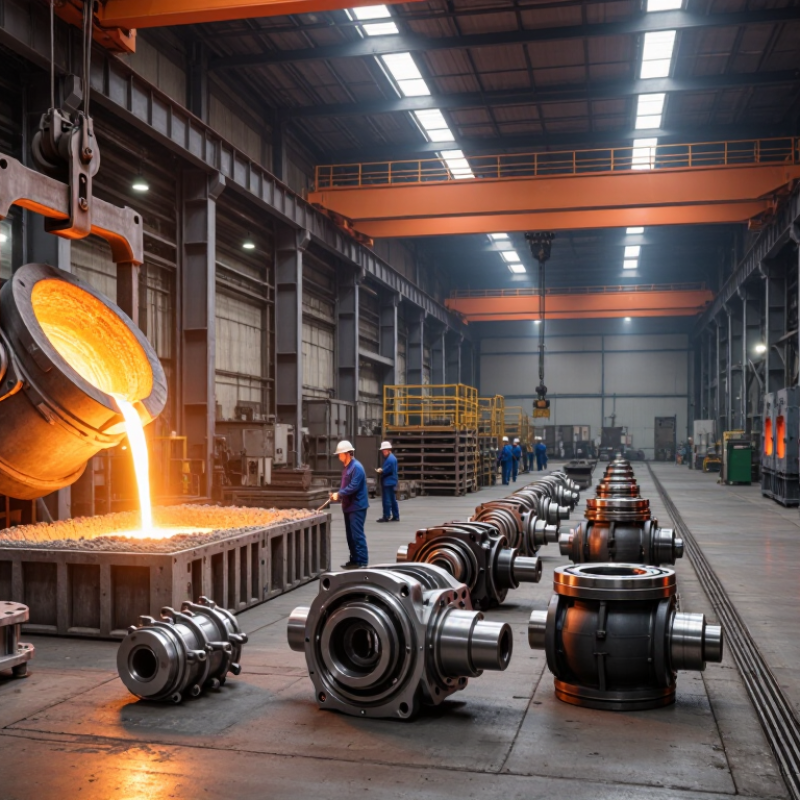
Construction Equipment Metal Casting is the process of forming durable machine parts from molten metal. It supports excavators, loaders, cranes, bulldozers, and mining equipment. Common castings include engine blocks, hydraulic valve bodies, counterweights, track links, and gearbox housings.
The process begins with a pattern that defines the component’s shape. A sand, ceramic, or permanent mold then receives carefully controlled molten iron, steel, or aluminum. After cooling, workers remove the casting, clean its surfaces, and machine critical dimensions. Quality depends on more than shape. Metal temperature, filling speed, mold strength, cooling behavior, and chemical composition can influence cracks, pores, distortion, and fatigue life. As casting expert John Campbell has stated, “The quality of a casting is determined by the quality of the liquid metal.”
That principle matters in heavy equipment. A hidden pore near a hydraulic passage can become a leak. A small shrinkage defect may grow under repeated impact. Inspection methods such as dimensional checks, hardness testing, ultrasonic testing, and radiography help reveal these risks. Still, inspection cannot repair poor process control. That is an uncomfortable truth.
A reliable supplier should document alloy grades, melt analysis, mold parameters, heat treatment, and traceability. Engineers must also match the casting design with real field loads, vibration, dirt, and temperature changes. Not every heavy part needs the thickest wall. More metal can increase weight, cost, and internal stress. Good design remains a compromise. This guide explains how Construction Equipment Metal Casting works, where it performs best, and why small manufacturing decisions can determine long-term machine reliability.
Definition and Scope of Construction Equipment Metal Casting
What Is Construction Equipment Metal Casting?
Construction equipment metal casting is the controlled process of pouring molten metal into a designed mold. After cooling, the part is cleaned, inspected, and machined. Typical castings include engine blocks, hydraulic bodies, gear housings, brake components, counterweights, and track links. These parts must tolerate shock, vibration, abrasive dust, and repeated loading.
The definition is wider than “making metal parts.” Its scope covers material selection, pattern design, mold preparation, melting, pouring, heat treatment, machining, and quality verification. Gray iron suits vibration-damping housings, while ductile iron often supports components requiring higher tensile strength. Steel castings serve demanding structural or impact applications. The World Foundry Organization’s 2023 Census reported approximately 109.7 million tonnes of global castings in 2022, showing the scale of the wider industry. Construction equipment represents one demanding segment within that volume.
Performance depends on details that are easy to overlook. A small shrinkage cavity near a hydraulic passage can become a serious field failure. Non-destructive testing, dimensional checks, and chemical analysis therefore belong within the casting scope. The American Foundry Society identifies process control and defect prevention as central quality priorities. Experience also shows that design changes made late can increase tooling costs and waste. The boundary is not perfectly clean. Casting experts must review load paths, repair limits, recyclability, and service conditions together. A technically acceptable casting may still be the wrong choice if inspection access is poor.
What Is Construction Equipment Metal Casting? - Definition and Scope of Construction Equipment Metal Casting
Construction equipment metal casting is the manufacturing process of producing metal components by pouring molten metal into a mold, allowing it to solidify, and removing the finished casting for cleaning, inspection, and machining. The table below summarizes its definition, materials, processes, components, performance requirements, and application scope.
| Data Dimension | Typical Content or Range | Relevance to Construction Equipment | Key Technical Considerations |
|---|---|---|---|
| Definition | Manufacturing metal parts by filling a mold with molten metal, solidifying the metal, and removing the shaped component. | Enables the production of large, complex, and highly loaded components used in excavators, loaders, cranes, compactors, and other heavy machinery. | Mold design, metal flow, solidification, dimensional control, defect prevention, and post-casting finishing determine final quality. |
| Main Ferrous Materials | Gray cast iron, ductile iron, compacted graphite iron, carbon steel, and low-alloy steel. | Used for housings, counterweights, brackets, structural parts, transmission components, and wear-resistant components. | Material selection depends on tensile strength, impact resistance, fatigue performance, machinability, wear resistance, and section thickness. |
| Main Non-Ferrous Materials | Aluminum alloys, copper alloys, and selected magnesium or zinc alloys. | Applied where low weight, corrosion resistance, thermal conductivity, or electrical conductivity is important. | Non-ferrous alloys generally require controlled melt temperature, oxidation protection, and careful attention to porosity and shrinkage. |
| Sand Casting | Molten metal is poured into a mold made from bonded sand. It is suitable for small batches, large parts, and complex geometries. | Common for engine blocks, gear housings, hydraulic bodies, brackets, and large structural castings. | Offers broad size flexibility and relatively low tooling cost, but surface finish and dimensional accuracy are usually lower than precision processes. |
| Investment Casting | A wax or polymer pattern is coated with ceramic material, removed, and replaced by molten metal. | Suitable for smaller, intricate components such as hydraulic parts, levers, fittings, and complex connectors. | Provides fine detail and good surface quality, but is generally less economical for very large or extremely heavy parts. |
| Die Casting | Molten non-ferrous metal is injected into a permanent metal die under pressure. | Used mainly for high-volume aluminum or zinc components, including covers, housings, and smaller structural parts. | Provides high production speed and repeatability; tooling cost is high and the process is generally unsuitable for most ferrous alloys. |
| Permanent Mold Casting | Metal is poured or injected into a reusable metal mold, often using gravity or low pressure. | Suitable for repeated production of aluminum and copper-alloy components with improved consistency. | Produces better surface finish and dimensional repeatability than many sand processes, but mold design is less flexible for very large shapes. |
| Centrifugal Casting | Molten metal solidifies while the mold rotates, using centrifugal force to distribute the metal. | Used for cylindrical or ring-shaped components such as bushings, sleeves, and selected wear parts. | Can improve material density and reduce some internal defects, but geometry is limited mainly to rotational shapes. |
| Common Cast Components | Engine blocks, cylinder heads, hydraulic valve bodies, gear housings, axle housings, brake components, counterweights, pulleys, brackets, and wear plates. | Castings can consolidate several machined or fabricated features into one near-net-shape component. | Critical areas require appropriate fillets, uniform wall thickness, draft angles, machining allowances, and access for inspection. |
| Load and Performance Requirements | High static strength, fatigue resistance, impact toughness, wear resistance, thermal stability, and dimensional stability. | Construction equipment operates under shock loads, vibration, dust, changing temperatures, and repeated duty cycles. | Design validation may include tensile testing, hardness testing, impact testing, fatigue assessment, and service-load simulation. |
| Typical Defects | Shrinkage cavities, gas porosity, sand inclusions, cold shuts, misruns, hot tears, distortion, and surface defects. | Defects may reduce strength, cause leakage in hydraulic components, or shorten service life in load-bearing parts. | Prevention relies on optimized gating and risering, melt cleanliness, mold permeability, temperature control, and process monitoring. |
| Post-Casting Operations | Shakeout, cutoff, shot blasting, grinding, heat treatment, machining, coating, balancing, and assembly preparation. | These operations bring the casting to the required dimensions, surface condition, mechanical properties, and installation specifications. | Machining allowances must be defined during casting design to avoid excessive material removal or insufficient stock. |
| Quality Inspection | Visual inspection, dimensional inspection, chemical analysis, hardness testing, tensile testing, ultrasonic testing, magnetic-particle testing, dye-penetrant testing, and radiographic testing. | Inspection confirms that safety-critical and pressure-containing parts meet design and production requirements. | Inspection method should match material, geometry, defect risk, wall thickness, and the criticality of the component. |
| Design Standards and Controls | Material specifications, casting tolerances, heat-treatment requirements, weld-repair procedures, non-destructive testing criteria, and traceability records. | Structured controls support consistent production and help ensure compatibility with the equipment manufacturer's engineering requirements. | Drawings should define material grade, mechanical properties, critical dimensions, datum references, surface requirements, and acceptance criteria. |
| Production Volume | Low-volume and prototype production commonly favors sand or investment casting; medium-volume production may use permanent molds; high-volume production can justify die casting. | The most suitable process depends on annual quantity, part size, geometry, material, tooling budget, and required repeatability. | A total-cost comparison should include tooling, melting, molding, finishing, machining, inspection, scrap, and maintenance costs. |
| Sustainability Scope | Use of recycled metal, return of clean casting scrap, energy-efficient melting, optimized mold design, and reduced machining allowance. | Efficient casting can reduce material waste and lower the energy required for downstream machining and transportation. | Scrap segregation, alloy control, furnace efficiency, emissions management, and process yield are important environmental factors. |
| End-Use Equipment | Excavators, wheel loaders, bulldozers, graders, cranes, forklifts, drilling machines, concrete equipment, road rollers, and agricultural-construction machines. | Metal castings support power transmission, hydraulic control, structural loading, ground engagement, braking, and operator-safety functions. | Component requirements vary according to machine size, duty cycle, operating environment, maintenance strategy, and regulatory obligations. |
Note: Actual material grades, dimensions, tolerances, testing methods, and acceptance limits should be specified according to the component drawing, applicable standards, operating conditions, and equipment design requirements.
FAQS
It is the controlled pouring of molten metal into a shaped mold. The cooled part is cleaned, inspected, and machined.
Common examples include engine blocks, hydraulic bodies, gear housings, brake components, counterweights, and track links. These parts face vibration, impact, dust, and repeated loading.
Gray iron can reduce vibration in housings. Ductile iron offers higher tensile strength. Steel castings suit structural or high-impact applications. The best choice depends on service conditions.
Engineers review the drawing, expected loads, wear, heat, and corrosion. They then select a material and prepare a matching pattern. A few millimeters can affect assembly.
Sand, binder, and additives create a cavity around the pattern. Workers place cores for internal passages, such as hydraulic channels. The mold must remain dry and clean.
The metal cools and becomes a solid casting. Workers remove sand, trim excess material, and inspect the surface. Machining creates accurate holes and contact surfaces.
Dimensional checks, hardness tests, chemical analysis, and non-destructive testing can reveal problems. Test coupons may provide additional evidence of internal quality. A visual check is not enough.
Records connect the casting with its material, temperature, inspection results, and production conditions. They can explain unexpected failures during maintenance. Small details matter.
Shrinkage cavities, trapped sand, cracks, and dimensional errors can weaken performance. A cavity near a hydraulic passage may become a serious field failure. The process is not flawless.
They should review load paths, inspection access, repair limits, recyclability, and service conditions. A technically acceptable casting may still be a poor choice. Late design changes can increase tooling costs and waste.
Conclusion
Construction Equipment Metal Casting is the process of producing durable metal components for machinery used in excavation, lifting, loading, road building, and material handling. It involves shaping molten metal in specially designed molds to create parts with complex geometries, high strength, and reliable performance. Common materials include cast iron, carbon steel, alloy steel, aluminum alloys, and other metals selected according to load, wear, temperature, and corrosion requirements.
The casting process generally includes pattern design, mold preparation, metal melting, pouring, cooling, mold removal, cleaning, heat treatment, machining, and inspection. Typical cast components include engine housings, counterweights, gear cases, buckets, brackets, hubs, and structural frames. Proper casting can reduce material waste, simplify complex designs, and support cost-effective production, but possible limitations include porosity, shrinkage, surface defects, and dimensional variation. Quality standards, testing, and process control are therefore essential to ensure safety, consistency, and long service life.