Choosing an Industrial Sand Casting supplier in 2026 requires more than comparing prices and polished websites. The right partner must prove consistency under real production pressure. Experienced buyers examine alloy control, pattern accuracy, sand preparation, machining capability, and inspection discipline. They also ask how the supplier handles defects when a casting fails. A trustworthy foundry answers clearly, with records.
Professor John Campbell, a widely cited casting authority, stated: “Good castings are made in the mould, not in the foundry.” This principle remains practical today. During supplier visits, look for controlled pouring temperatures, clean furnace practices, labelled test coupons, and traceable material certificates. Ask to review dimensional reports from parts similar to yours. Inspect the storage of patterns and cores. Small details often reveal large risks.
Do not trust certificates alone.
A supplier may hold impressive approvals yet struggle with your geometry, alloy, or annual volume. Request sample castings, process-flow documents, rejection data, and realistic lead-time commitments. Discuss tooling ownership before production begins. Confirm how changes will be approved and recorded. Sustainable sand reclamation and energy monitoring also deserve attention in 2026.
The evaluation process is not perfect. Buyers can overvalue low unit costs or mistake confident sales language for technical capability. That is a common weakness. A stronger decision balances evidence, communication, engineering support, and total lifecycle cost. The best Industrial Sand Casting supplier is not always the largest. It is the one that can repeatedly deliver sound castings, explain problems honestly, and improve when the evidence demands it.
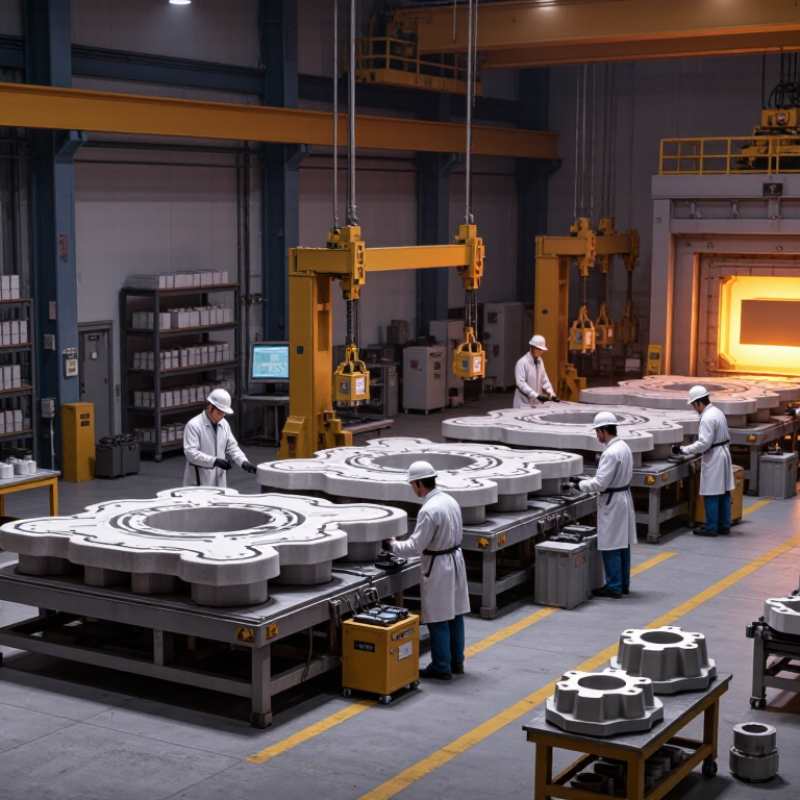
Defining Industrial Sand Casting Requirements for 2026
Industrial sand casting requirements in 2026 should begin with the part’s actual service conditions, not a supplier’s standard catalogue.
Define the alloy, casting weight, wall thickness, heat exposure, load cycles, and corrosion risks. Include critical dimensions and realistic tolerances. Excessively tight tolerances can increase machining cost without improving performance.
Be specific about production evidence.
Ask suppliers to explain their pattern-making method, mould sand controls, core design, pouring temperature, and inspection equipment. A reliable supplier should provide material certificates, dimensional reports, hardness results, and traceability for each batch.
For complex housings, request filling simulations or sample castings before approving full production. Small details matter.
A 3-millimetre hidden core shift can affect assembly.
Your requirements should also cover annual volume, prototype quantities, delivery intervals, packaging, and allowable repair limits. Discuss non-destructive testing when internal defects could cause failure.
Define whether visual marks, porosity, shrinkage, or machining allowances are acceptable. Digital monitoring and lower-waste sand practices may become important supplier selection factors in 2026.
However, sustainability claims need measurable data, not attractive wording.
A perfect specification is rarely possible.
We sometimes discover that a tolerance was copied from an old drawing and never challenged. Review the design with casting and machining engineers together.
Supplier capability should be tested against your real drawings, inspection expectations, and delivery pressure, rather than broad promises.
Evaluating Supplier Capabilities, Materials, and Quality Systems
How to Choose Industrial Sand Casting Suppliers in 2026?
Evaluating Supplier Capabilities, Materials, and Quality Systems
Choosing an industrial sand casting supplier in 2026 requires more than comparing hourly rates. Evaluate capability through evidence: furnace capacity, pattern control, molding methods, and machining support. Ask for production records involving similar alloys, casting weights, wall thicknesses, and annual volumes. During a plant visit, inspect ladle handling, sand storage, ventilation, and the distance between molding and inspection. Small details matter. Clean work areas do not guarantee stable castings, but neglected areas deserve questions.
Material expertise should match your actual service conditions. Discuss carbon steel, ductile iron, aluminum alloys, or heat-resistant grades with a qualified metallurgist. Request material certificates, chemical analysis, tensile results, hardness readings, and heat-treatment records. A supplier should explain how moisture, grain size, and sand additives affect surface finish and dimensional accuracy. I have seen impressive sample castings fail to represent routine production. One polished sample proves very little.
A reliable quality system links every casting to a clear record. Check incoming material controls, pattern identification, process inspections, nonconformance handling, and final inspection reports. Ask how the supplier manages dimensional changes after tooling repairs. Traceability should reach the melt batch, molding line, operator, and inspection equipment. Calibration dates matter too. Audits can reveal gaps, but they can also create artificial confidence. Leave room for uncomfortable questions, especially when corrective actions remain open or delivery pressure affects inspection decisions.
Comparing Production Technology, Lead Times, and Cost Structures
How to Choose Industrial Sand Casting Suppliers in 2026?
Comparing Production Technology, Lead Times, and Cost Structures
When evaluating an industrial sand casting supplier, inspect the process, not only the quoted price. A reliable supplier should explain its molding method, melting controls, and inspection equipment. Green sand suits many repeatable parts, while resin-bonded sand can support larger or more complex castings. Ask whether engineers use casting simulation to identify shrinkage, porosity, and weak sections before production. Request sample inspection records, including dimensional reports and material test results. Clear evidence builds confidence.
Lead time includes more than furnace availability. Request separate dates for tooling, pattern approval, first article casting, machining, and final inspection. For a 12-kilogram housing, a practical trial schedule may include one week for pattern changes and several days for testing. Confirm monthly capacity and backup equipment. Otherwise, one failed mold can stop delivery. It happens.
Cost structures deserve equal attention. Compare tooling, sand preparation, melting energy, machining, inspection, packaging, and freight as separate line items. A low casting price may hide expensive finishing work or high scrap rates. Ask how recycled sand and metal losses are monitored. I once accepted a short lead time without checking machining capacity. The castings arrived quickly, but finishing created a three-week delay. That mistake changed my supplier reviews: production promises now require documented capacity, recent quality data, and realistic correction time.
Verifying Compliance, Sustainability, and Supply Chain Reliability
How to Choose Industrial Sand Casting Suppliers in 2026?
Verifying Compliance, Sustainability, and Supply Chain Reliability
A capable sand casting supplier should provide current certificates, process records, and clear quality responsibilities. Request evidence of quality management, worker safety controls, environmental permits, and material traceability. Ask for records. Confirm that certificates match the actual production site, not only a parent company office. During a supplier audit, inspect melting areas, sand storage, furnace logs, and nonconformance reports. These details reveal daily discipline better than polished presentations.
Sustainability requires measurable information. Review energy use per casting, recycled sand percentages, dust collection performance, and wastewater handling. Ask how the supplier controls emissions during melting and finishing. A vague “green” statement proves little. Compare recent utility data, waste transfer documents, and improvement targets. Some facilities report recycled content but exclude rejected castings. That gap deserves discussion, not automatic rejection.
Supply chain reliability depends on resilience, not promises. Check average lead times, on-time delivery records, backup furnaces, maintenance planning, and dependence on one raw material source. Request a documented response plan for power failures, transport delays, and tooling damage. Test communication with a small pilot order. Slow replies during quoting may become serious delays later. A supplier can meet specifications yet still fail your schedule. Review capacity during peak seasons, inspect packaging methods, and agree on escalation contacts before production begins. Metrics can mislead. Recheck them against shipment records and customer references.
Selecting and Auditing the Best Industrial Sand Casting Supplier
How to Choose Industrial Sand Casting Suppliers in 2026?
Selecting an industrial sand casting supplier requires more than comparing quoted prices. The 2023 World Foundry Organization Census reported over 109 million tonnes of global castings in 2022. That scale highlights the importance of stable processes, not attractive samples alone. During an audit, review furnace calibration, charge-material records, sand moisture, permeability, and core storage conditions. Ask to see production records from comparable parts. Test the process.
A capable supplier should provide material certificates, dimensional inspection reports, and heat-treatment records with clear batch traceability. ISO 9001 certification supports controlled systems, but it does not prove casting quality by itself. Request evidence of corrective actions, rejection rates, and recurring defect analysis. A useful audit also checks Cpk data for critical dimensions, although suppliers may present only their strongest results. That is a warning, not proof of failure.
The American Foundry Society identifies porosity, inclusions, and dimensional variation as persistent metalcasting quality concerns. Therefore, inspect actual parts, not only polished photographs. Ask engineers to explain how they control gas defects around ribs, bosses, and thin walls. Visit the foundry if production volume justifies it. Look at floor discipline, ventilation, labeling, and operator training. No audit is perfect. Supplier promises can change under schedule pressure, so a trial order should include measurable acceptance criteria, independent inspection rights, and a documented review after delivery.
How to Choose Industrial Sand Casting Suppliers in 2026?
Selecting and Auditing the Best Industrial Sand Casting Supplier
The chart presents practical reference targets for supplier audits: complete material and heat-lot traceability, verified inspection records, strong first-article conformity, reliable delivery, and timely corrective actions. Project specifications, applicable standards, and customer quality agreements should take priority over these general benchmarks.
FAQS
Green sand works well for repeatable parts and steady production. Resin-bonded sand supports larger or more complex shapes. Ask engineers to explain their choice.
Review melting controls, furnace calibration, sand moisture, and core storage. Ask whether simulation checks shrinkage, porosity, and weak sections. Test the process.
Request separate dates for tooling, pattern approval, first casting, machining, and final inspection. A 12-kilogram housing may need several days for testing. Do not trust one final date alone.
Ask for comparable production records and current machine loading. Confirm backup furnaces, molding equipment, and machining capacity. One failed mold can stop delivery.
Compare tooling, sand preparation, melting energy, machining, inspection, packaging, and freight. A cheap casting may hide costly finishing work. Check scrap and metal-loss records.
Request material certificates, dimensional reports, heat-treatment records, and batch traceability. Review rejection rates and corrective actions. Recent records matter more than polished photographs.
Inspect comparable parts and production records. Check ventilation, labeling, floor discipline, and operator training. Ask about gas defects near ribs, bosses, and thin walls.
Yes, when the project is important. Define measurable acceptance criteria and independent inspection rights. Include a documented review after delivery. No audit is perfect.
Be cautious when a supplier shows only its strongest capability data. Missing correction records can matter. I once accepted a short lead time, but machining caused a three-week delay. That mistake changed my review method.
Conclusion
Choosing the right Industrial Sand Casting supplier in 2026 requires a structured evaluation of technical, commercial, and operational factors. Start by defining your component requirements, including alloy type, casting size, dimensional tolerances, surface finish, production volume, and expected service conditions. Then assess each supplier’s foundry equipment, engineering expertise, material control, tooling capabilities, inspection procedures, and quality management systems. A capable supplier should demonstrate consistent process control, reliable testing methods, and the ability to support both prototype development and long-term production.
Cost should be evaluated alongside production technology, lead times, tooling investment, logistics, and total ownership value rather than unit price alone. Buyers should also verify regulatory compliance, workplace and environmental practices, sustainability initiatives, traceability, and supply chain resilience. Before making a final decision, conduct a detailed supplier audit, review sample castings and quality records, confirm communication procedures, and establish clear performance expectations. The best partner will combine dependable quality, transparent pricing, flexible capacity, responsible operations, and the stability needed to support future manufacturing demands.