ISO 9001:2015 Certified
We make metalwork — 40+ years of precision manufacturing expertise

Metal Manufacturing Blog & Resources

Expert technical articles, design guides, and industry news on custom metal solutions.

0%

Renewable Energy CNC Machining supports components used in wind turbines, solar tracking systems, hydropower equipment, and energy storage. These parts may face vibration, weather, heat, or repeated movement. A machined mounting bracket, for example, must fit its assembly and withstand its working environment. Small errors can cause delays during installation or maintenance. Details matter.

For buyers, choosing a supplier involves more than comparing quoted prices. Material grade, machining capability, dimensional inspection, surface finish, and production capacity all affect part performance. Ask how critical dimensions are measured and whether inspection records can be provided. For outdoor components, discuss corrosion protection and the intended service conditions. Be specific. A drawing alone may not explain every requirement.

The following seven tips offer a practical framework for reviewing suppliers, quotations, and sample parts. They cover design readiness, material selection, tolerances, quality checks, communication, lead times, and long-term value. No single checklist fits every project; a prototype decision may differ from a high-volume order. Even careful planning can miss something. Buyers should revisit assumptions when designs or operating conditions change, and confirm important specifications with qualified engineering teams. Reliable sourcing depends on clear evidence, realistic expectations, and open discussion—not promises alone.
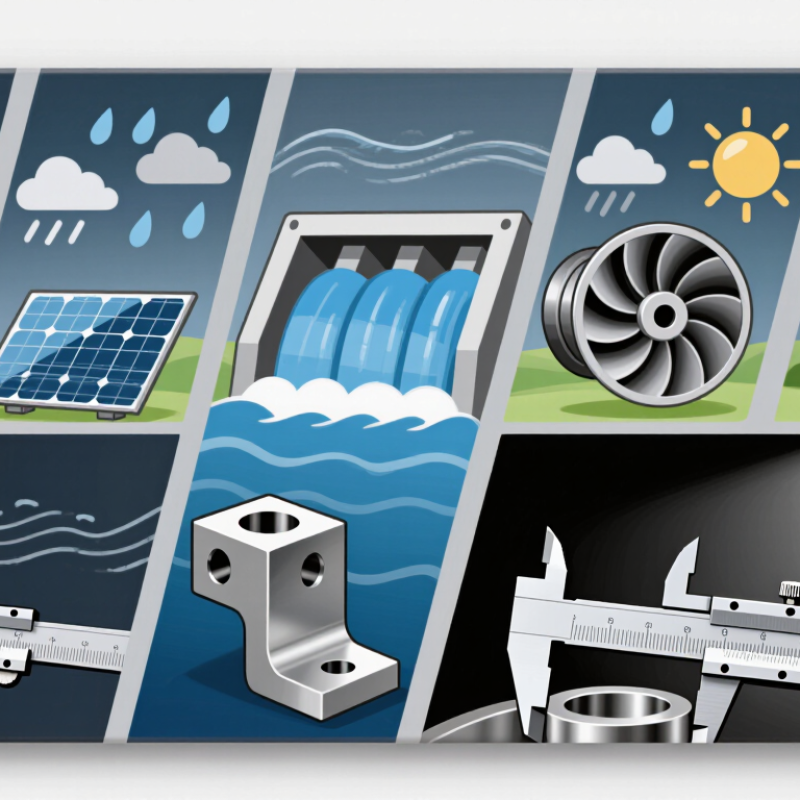
7 Renewable Energy CNC Machining Tips for Buyers

Understanding CNC Machining Requirements for Renewable Energy Components

Renewable energy components face long service lives, changing loads, and outdoor exposure. CNC machining requirements should reflect the part’s actual operating conditions, not just its shape. A solar tracker bracket may need accurate pivot bores, while a small turbine component may experience repeated vibration. Different jobs, different risks.

Start with material, load, and environment. Aluminum can reduce weight, but thin sections may distort during machining or clamping. Stainless steel can resist corrosion, though it may require slower cutting and careful tool selection. Ask whether the component will see salt spray, temperature swings, or abrasive dust. Small details matter. A drainage feature or rounded edge can help limit trapped moisture and stress concentration.

Specify critical dimensions clearly on the drawing. Identify bearing fits, bolt patterns, flatness, and surface finish where they affect assembly or performance. Avoid tight tolerances everywhere; they can increase machining time without improving function. Request inspection records for key features, and confirm how the supplier will measure them. For repeat orders, consistent setups and documented revisions help prevent mismatched parts. I have seen drawings that looked complete but left datum choices unclear. That is easy to overlook, and worth correcting before production. Material certificates and a first-article review can also support traceability, especially when components are difficult to access after installation.

Choosing Materials and Tolerances for Performance and Durability

Renewable-energy components face weather, vibration, and repeated loading. A CNC-machined turbine sensor bracket, for example, may sit in rain and salt-laden air for years. Material choice should match that environment, not just the drawing. Aluminum is light and machines efficiently, but its strength and surface protection depend on the alloy and finish. Stainless steel can resist corrosion well, though it adds weight and may cost more to machine. Check contact between dissimilar metals, too; moisture can encourage galvanic corrosion. Small details matter.

Tolerances should protect function without making every dimension unnecessarily precise. A bearing seat may need close control for proper fit, while a cover plate may work perfectly with a looser limit. Tight tolerances can increase machining time and inspection effort. They can also reject parts that perform reliably. Specify critical dimensions, surface finish, and datum references clearly, then discuss the drawing with the machinist before production. Thermal expansion deserves attention for parts exposed to changing temperatures. It is easy to overlook. A practical first design is rarely perfect; test-fit a prototype, review wear points, and revise dimensions when real operating conditions reveal a problem.

Evaluating Supplier Expertise, Equipment, and Quality Controls

Renewable-energy components face weather, vibration, and long service intervals. A machined bearing housing for a wind turbine may need stable dimensions despite repeated loading. Solar mounting hardware has different demands, including fit across long rows of structures. Ask suppliers which comparable parts they have produced, and request drawings or inspection records with sensitive details removed. Specific examples matter. A polished capability statement alone does not show process control.

Review the equipment against your part, not a generic machine list. Large workpieces may require suitable travel, while tight bores may call for in-process probing or dedicated gauges. Ask how operators manage material variation and tool wear. Also check whether the supplier can explain its inspection plan in plain terms. Advanced equipment helps, but it cannot replace sound setup practices.

Quality controls should connect each requirement to a measurable check. Look for documented calibration, first-article inspection, and traceability from raw material to finished part. For corrosion-sensitive applications, confirm how material certificates and surface treatments are verified. Ask what happens when a measurement falls outside tolerance. A clear response is reassuring; vague promises are not. One point deserves reflection: more inspections do not automatically mean better quality if the measurement method is unsuitable. Compare the control plan with the actual risks of your component.

7 Renewable Energy CNC Machining Tips for Buyers - Evaluating Supplier Expertise, Equipment, and Quality Controls
# Evaluation area What to verify Useful evidence or questions Why it matters
1 Relevant part experience Experience machining comparable renewable-energy components, such as wind-turbine housings, solar tracking parts, or components for energy-storage systems. Ask for anonymized examples, typical materials and tolerances, and details about how similar geometry or production challenges were handled. Relevant experience can reveal whether the supplier understands the part’s function, critical features, and production risks.
2 Machine capability and capacity Check that machine travel, workholding, spindle capability, and available operations suit the part’s size, material, and required features. Request the machine type and working envelope planned for the job, plus confirmation of available capacity and any secondary operations. A machine that is appropriately sized and equipped can help avoid unnecessary setups, delays, and process limitations.
3 Material and traceability Confirm the supplier can source and machine the specified material grade and maintain identification through receiving, production, and shipment. Ask how material certificates, lot identification, substitutions, and nonconforming material are controlled. Traceability helps connect finished parts to their material documentation and supports investigation if an issue arises.
4 Metrology and inspection Review whether inspection equipment and methods are suitable for the part’s critical dimensions, geometric features, and specified surface finish. Ask for a sample inspection report, the inspection plan, equipment calibration status, and how measurement results are recorded. Suitable measurement methods provide objective evidence that parts meet drawing requirements.
5 Process control and repeatability Determine how the supplier controls setup, tool wear, program revisions, and in-process checks across the planned production quantity. Ask how first-article approval is handled, how approved programs are protected from unintended changes, and what triggers corrective action. Consistent controls help maintain dimensional results from initial parts through repeat orders.
6 Quality system and nonconformance handling Evaluate documented procedures for inspection, document control, nonconforming product, corrective action, and customer communication. Request relevant quality-system documentation and ask for a redacted example showing how a defect was contained and resolved. A clear response process limits the risk of unapproved parts progressing to delivery or assembly.
7 Capacity, lead time, and supply risk Assess realistic lead times, production loading, material availability, outside processing, and plans for interruptions or urgent demand. Ask for a process-based schedule, key dependencies, order-change terms, and how delivery performance and shortages are communicated. Understanding constraints early helps buyers plan launches, replenishment, and contingency stock appropriately.
Buyer note: Confirm requirements against the latest part drawing, purchase specification, and applicable quality agreements before placing an order.

Comparing Pricing, Lead Times, and Production Capacity

For renewable-energy CNC parts, compare total landed cost, not just the quoted machining rate. Ask suppliers to separate material, setup, machining, finishing, inspection, and freight. A lower unit price can hide a costly setup charge or extra inspection fees. IRENA’s Renewable Power Generation Costs in 2023 report found that 81% of newly commissioned renewable power capacity produced electricity more cheaply than fossil-fuel alternatives. That cost pressure makes predictable component pricing important, but the cheapest quote is not automatically the best value.

Compare lead times by stage: material availability, first-article approval, production, and shipping. For a machined inverter housing, ask whether the quoted schedule includes deburring, coating, and dimensional checks. Request firm dates for both prototypes and repeat orders. Then compare capacity using evidence, such as available machine hours, current order commitments, and backup plans for tool failure. A supplier’s maximum capacity may not be the capacity available for your job. Schedules can slip; allow for that.

Tips: Send the same drawing revision and quantity assumptions to every bidder. Request pricing at several volumes, plus a sample inspection report. Ask what changes if demand doubles. Confirm the quote’s validity period and material-price assumptions. Small details matter. A missing finish note can distort the comparison. IRENA’s data concerns energy costs, not CNC lead times, so verify supplier promises directly.

Verifying Sustainability, Traceability, and After-Sales Support

Renewable-energy components often need tight tolerances and dependable material records. Ask CNC suppliers for mill certificates, alloy grades, and heat or batch numbers. Then trace one finished part back to its raw-material lot. A certificate alone is not enough. Check whether the identifiers survive cutting, machining, and packing. The IEA’s Renewables 2024 report projects about 5,500 GW of new renewable power capacity between 2024 and 2030. That growth makes dependable component supply increasingly important, but it does not prove any supplier is sustainable.

Request practical evidence: electricity use per production batch, scrap handling records, and documented recycled content where relevant. Compare the figures across similar jobs, not just across suppliers; machines and part designs differ. Ask for the reporting period and calculation method. Paper is not proof. I would also request a sample traceability record before placing a large order. It may expose gaps that a polished sustainability statement hides.

After-sales support deserves the same scrutiny. Get written response times, spare-parts lead times, warranty limits, and repair procedures. Ask who handles a failed component and what inspection records come back with it. If the answer is vague, test it with a realistic scenario: a damaged machined housing needed during a scheduled maintenance window. A fast quote is helpful, but a documented recovery plan matters more. I still would not treat every metric as perfectly comparable; suppliers may measure energy and waste differently. Verify the method, and keep the records with the purchase file.

FAQS

What evidence shows a supplier has made comparable renewable-energy components?

Ask for examples, drawings, or inspection records with sensitive details removed. Specific parts reveal more than a polished capability statement.

How should I assess a supplier’s machines?

Match machine travel and tooling to your component. Large housings need sufficient work area; tight bores may need probing or dedicated gauges.

Which quality records should I request?

Look for calibration records, first-article inspection, and material traceability. Ask how the supplier responds when a measurement falls outside tolerance.

Do more inspections always mean better quality?

Not necessarily. The measurement method must suit the part’s risks. More checks can still miss the wrong feature.

How can I verify material traceability?

Request mill certificates, alloy grades, and batch numbers. Trace one finished part back to its raw-material lot. Check its identifiers after machining and packing.

What sustainability evidence is useful?

Ask for production-batch electricity use, scrap records, and recycled-content details when relevant. Check the reporting period and calculation method. Paper alone proves little.

What after-sales details should I confirm?

Get written response times, spare-parts lead times, warranty limits, and repair procedures. Ask what records accompany a returned component.

How can I test a supplier’s recovery plan?

Describe a damaged housing needed during scheduled maintenance. Ask who handles the failure and how quickly replacement support is available. Keep the answer on file.

Conclusion

Renewable Energy CNC Machining buyers can make stronger sourcing decisions by first defining each component’s function, operating environment, and manufacturing requirements. Clear specifications for dimensions, tolerances, surface finish, and expected service life help ensure parts perform reliably in demanding renewable energy systems. Material selection should balance strength, corrosion resistance, weight, and durability with the needs of the application.

When evaluating suppliers, consider their relevant machining experience, equipment, inspection methods, and quality controls. Compare quotes in context, taking into account lead times, production capacity, and the ability to support future orders—not just the initial price. It is also important to verify material traceability, sustainability practices, and after-sales support. A careful review of these factors can help buyers reduce production risks, maintain consistent component quality, and build dependable supply relationships for renewable energy projects.

Sophie

Sophie

Sophie is a dedicated marketing professional with a profound expertise in our company's offerings. With a solid background in digital marketing strategies and a passion for innovative solutions, she plays a pivotal role in driving our brand forward. Sophie is known for her ability to translate......