ISO 9001:2015 Certified
We make metalwork — 40+ years of precision manufacturing expertise

Metal Manufacturing Blog & Resources

Expert technical articles, design guides, and industry news on custom metal solutions.

0%

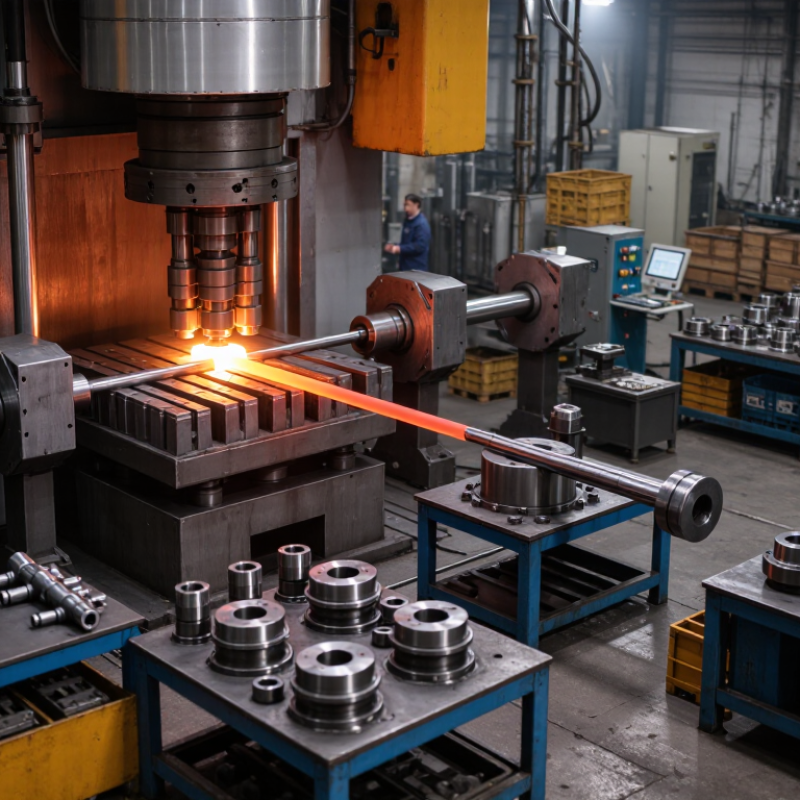
Industrial Component Forging offers global buyers a practical route to stronger, more consistent parts. The process shapes heated metal under controlled pressure, refining its grain structure and improving resistance to fatigue, impact, and wear. These advantages matter in shafts, flanges, gears, brackets, and other components exposed to demanding service conditions. A forged part may appear simple, yet its performance depends on material selection, die design, temperature control, and heat treatment.

Experienced sourcing teams evaluate more than unit price. They review supplier qualifications, production records, inspection equipment, and traceability systems. Material certificates, dimensional reports, hardness tests, and non-destructive inspections provide useful evidence. They also compare tooling costs, minimum order quantities, packaging methods, and realistic delivery schedules. Clear drawings and defined acceptance criteria reduce misunderstandings across borders. Details decide.

Industrial Component Forging can support reliable supply, but it is not a universal answer. Complex shapes may require machining or another manufacturing route. Initial tooling investment can also challenge smaller orders. That limitation deserves honest attention. Suppliers should demonstrate process capability through samples, audits, and documented corrective actions. Buyers should confirm applicable standards and customer requirements before production begins. In practice, the best global sourcing decision combines engineering judgment, verified supplier experience, and transparent communication. Claims should be tested, not simply repeated.
Why Choose Industrial Component Forging for Global Sourcing?

Industrial Component Forging: Definition and Core Manufacturing Principles

Why Choose Industrial Component Forging for Global Sourcing?

Industrial component forging shapes heated or cold metal through controlled compressive force. It is not casting. A billet enters a die, then pressure forms the required geometry. The grain flow matters. This structure can improve strength, fatigue resistance, and impact performance in load-bearing parts. According to the World Steel Association’s 2024 statistics, global crude steel production reached about 1.89 billion metric tonnes in 2023. That scale supports broad material availability for international sourcing, but steel grade verification remains essential.

Core manufacturing begins with material selection, heating control, die design, forming, trimming, and heat treatment. Each stage affects dimensional stability and mechanical performance. Engineers commonly verify chemistry, hardness, tensile strength, and non-destructive testing results against applicable standards, such as ASTM specifications. Near-net-shape forging can also reduce machining allowances and scrap, according to guidance from the U.S. Department of Energy’s industrial efficiency publications. That benefit depends on accurate dies and stable process control.

The process is not automatically superior. A poor die design can create laps, cracks, or uneven grain flow. In my experience, small drawing changes often reveal larger sourcing risks. Supplier audits should examine furnace records, calibration schedules, inspection samples, and traceability documents. ISO 9001-based quality systems improve consistency, yet paperwork alone cannot prove forging quality. Operators still need practical judgment. That gap matters. Consistent tolerances, repeatable heat treatment, and clear inspection data make forged components more reliable across borders.

Material Performance Advantages of Forged Industrial Components

Industrial component forging offers a practical material advantage for global sourcing.

During forging, heated metal is compressed and shaped under controlled force. This process can refine the grain structure and reduce internal discontinuities. The result is often stronger fatigue resistance than comparable cast components.

Consider a forged shaft inside a conveyor drive. Repeated torque creates stress around shoulders, keyways, and threads. A dense, well-oriented grain flow can help the shaft withstand these demanding loads. It may also support better impact resistance and dimensional stability.

Small gains matter. Not every forging wins. Poor die design, overheating, or uneven cooling can weaken performance and increase machining waste.

Material selection should match the working environment, not just the drawing. Carbon steel may suit general structural loads and moderate temperatures. Stainless steel can provide stronger corrosion resistance in wet processing areas. Alloy steel often supports higher strength after heat treatment. Engineers should verify tensile strength, yield strength, elongation, hardness, and impact results.

Hardness alone can mislead. A very hard component may resist wear but become less tolerant of sudden shock. Reliable suppliers provide heat numbers, inspection records, and repeatable process controls. Independent testing can confirm those claims.

In sourcing work, I have seen complete reports overlook decarburized surfaces or inconsistent hardness near the core. That gap deserves attention. Forged components perform best when metallurgy, heat treatment, machining, and inspection remain connected.

How Forging Supports Global Sourcing and Supply Chain Reliability

Industrial component forging gives global sourcing teams a repeatable way to secure critical metal parts. Heated steel or aluminum is shaped under controlled pressure, improving strength around high-stress areas. This matters for shafts, flanges, brackets, and other components exposed to repeated loads. Forged parts can also reduce machining waste when the preform closely matches the final geometry. Small gains matter at thousands of units.

Supply chain reliability starts with a clear technical package. It should define material grade, heat treatment, dimensions, tolerances, testing, and acceptance criteria. Qualified suppliers should provide heat numbers, inspection reports, and records linking each batch to its process history. Physical samples, capability studies, and independent audits can reveal problems before mass production. A source near one market may shorten transport time, while a second approved source protects against outages. That protection has limits.

Forging is not a cure for every sourcing risk. New dies require time, engineering review, and realistic volume forecasts. Poorly controlled heating can cause scale, distortion, or inconsistent properties. Global buyers should compare total cost, not only the quoted piece price. Freight, tooling, customs handling, inspection, and buffer stock can change the decision. Review supplier capacity during peak demand, too. A practical plan leaves room for learning, because early production often exposes details drawings missed.

Why Choose Industrial Component Forging for Global Sourcing?

Typical material utilization by manufacturing process

Forging commonly achieves high material utilization while producing strong, consistent components. Lower material waste can simplify raw-material planning, reduce exposure to metal price changes, and support more predictable sourcing across qualified suppliers.

Values show representative midpoints of commonly reported engineering ranges. Actual utilization depends on component geometry, alloy, tooling, tolerances, and production volume. Typical ranges: open-die forging 60–80%, closed-die forging 70–90%, machining from bar 40–60%, and casting 70–90%.

Quality Standards, Cost Factors, and Supplier Evaluation

Industrial component forging deserves close evaluation because quality is built into the process, not added during final inspection. The ISO Survey of Certifications 2023 recorded 1,265,216 ISO 9001 certificates worldwide. Certification helps, but it cannot replace evidence. Request material certificates, heat-lot traceability, ultrasonic testing, hardness results, and dimensional capability data. For critical parts, review forging reduction ratios and die-maintenance records. A certificate can still hide weak process control.

Cost comparisons should use landed cost, not unit price alone. Include steel volatility, tooling, machining allowances, freight, inspection, packaging, and possible rework. The World Bank’s 2023 Logistics Performance Index assessed 139 economies through customs, infrastructure, shipment timeliness, and logistics competence. These factors affect delivery risk. A supplier with a slightly higher quote may reduce buffer stock and emergency freight. Cheap can become expensive.

Supplier evaluation needs a practical audit. Check furnace calibration, operator training, nonconformance handling, and corrective-action speed. Ask for recent process-control charts, not prepared samples only. Review capacity during peak demand. That detail matters. In real audits, paperwork can look cleaner than the production floor. A missed question about subcontracted heat treatment may later damage traceability. I would also score communication, engineering response, and change-control discipline. Perfect data rarely exists, so unexplained gaps deserve more attention than polished presentations.

Why Choose Industrial Component Forging for Global Sourcing?

Quality standards, cost factors, and supplier evaluation benchmarks for industrial forged components

Evaluation Area Data Dimension Practical Benchmark or Standard What the Buyer Should Verify Sourcing Relevance
Quality Standards Material traceability Heat, batch, and lot identification maintained from raw material receipt through final shipment. Review material certificates, heat numbers, identification procedures, and traceability records. Reduces recall risk and supports root-cause analysis.
Quality Standards Material certification Inspection documents issued according to EN 10204, commonly Type 3.1 for metallic products. Confirm that the certificate identifies chemical composition, mechanical properties, heat number, and inspection results. Provides documented evidence that the supplied material matches the purchase specification.
Quality Standards Mechanical testing Tensile testing commonly performed using ISO 6892-1 or ASTM A370, with requirements defined by the applicable material specification. Check test direction, specimen location, sampling frequency, yield strength, tensile strength, and elongation. Confirms load-bearing performance and suitability for safety-critical applications.
Quality Standards Hardness verification Rockwell or Vickers hardness testing performed to recognized methods such as ISO 6508 or ISO 6507. Verify calibrated equipment, test locations, acceptance range, and whether hardness is measured before or after heat treatment. Helps control wear resistance, machinability, and heat-treatment consistency.
Quality Standards Non-destructive testing Magnetic particle, ultrasonic, liquid penetrant, or visual inspection selected according to material, geometry, and risk level. Confirm the inspection method, coverage, acceptance criteria, operator qualification, and report format. Detects surface or internal discontinuities without destroying the component.
Quality Standards Dimensional control Critical dimensions controlled by drawing tolerances, process capability studies, and calibrated measuring equipment. Review control plans, first-article inspection reports, gauge calibration records, and measurement uncertainty. Limits assembly problems and reduces downstream machining or sorting costs.
Quality Standards Quality management system A documented quality system aligned with ISO 9001; sector-specific requirements may apply for regulated industries. Check certificate validity, audit history, corrective-action performance, and scope of certification. Improves process consistency and supplier accountability.
Quality Standards Heat-treatment control Controlled furnace cycle, temperature records, quenching or cooling parameters, and post-treatment inspection. Request furnace charts, load identification, equipment calibration, and evidence that the cycle matches the approved procedure. Protects strength, toughness, fatigue life, and dimensional stability.
Cost Factors Material utilization Forging economics improve when billet size, grain flow, trimming allowance, and machining allowance are optimized. Compare the finished-part mass with input billet mass and ask for the expected material yield. Lower scrap and better yield can reduce the part price without reducing quality.
Cost Factors Tooling and die investment Initial tooling cost depends on part size, material, complexity, die life, number of operations, and required tolerances. Confirm tooling ownership, maintenance responsibility, expected die life, storage terms, and replacement pricing. Tooling is a major upfront cost but is distributed across production volume.
Cost Factors Production volume Higher annual volume generally lowers the tooling cost per piece and supports dedicated process controls. Request quotations at several annual volumes and compare total landed cost rather than unit price alone. Best value is often achieved when recurring demand justifies dedicated tooling.
Cost Factors Machining allowance Near-net-shape forging can reduce machining time, provided the design maintains adequate stock for dimensional correction. Compare forged dimensions, final machined dimensions, material removal rate, and expected machining cycle time. Lower machining content can reduce labor, material waste, and production lead time.
Cost Factors Energy and labor content Total conversion cost includes heating, forming, trimming, heat treatment, inspection, labor, maintenance, and utilities. Ask suppliers to identify major cost drivers and clarify which processes are performed internally or subcontracted. Improves price transparency and helps identify supply-chain risks.
Cost Factors Logistics and landed cost Landed cost includes unit price, packaging, inland transport, freight, insurance, duties, inspection, and inventory carrying cost. Compare quotations using the same Incoterms, shipment quantity, packaging specification, and delivery destination. Prevents a low ex-works price from becoming a high delivered cost.
Supplier Evaluation Forging capability Supplier capacity should match the required material grade, part mass, maximum envelope, forging temperature, and production volume. Verify press or hammer capacity, furnace capability, die-making resources, and similar process experience. Reduces the risk of unsuitable equipment, unstable processes, or unplanned outsourcing.
Supplier Evaluation Process capability For critical characteristics, capable processes are commonly demonstrated using Cp/Cpk studies; acceptance targets should be agreed in advance. Request capability data for critical dimensions and mechanical properties, including sample size and measurement method. Provides evidence that the process can repeatedly meet specifications.
Supplier Evaluation Quality performance Evaluate nonconformance rate, customer complaints, corrective-action closure time, and on-time delivery history. Review trend data for at least several recent production periods and examine examples of completed corrective actions. Historical performance is often more useful than certification status alone.
Supplier Evaluation Capacity and lead time Lead time should include engineering review, tooling, sampling, approval, production, inspection, and export preparation. Request a stage-by-stage schedule and confirm available capacity during peak demand periods. Supports realistic launch planning and reduces stockout risk.
Supplier Evaluation Subcontractor control Heat treatment, machining, coating, and testing subcontractors should be qualified and controlled by the primary supplier. Identify all external processes and verify approval records, specifications, traceability, and change-notification procedures. Improves visibility across the complete manufacturing chain.
Supplier Evaluation Documentation and change control Approved drawings, process parameters, inspection plans, and material substitutions should be formally controlled. Confirm that no material, process, tooling, or subcontractor change occurs without written approval when required. Protects product consistency over the full sourcing life cycle.
Supplier Evaluation Business continuity A robust supplier maintains contingency plans for equipment failure, raw-material disruption, power interruption, and logistics delays. Assess backup equipment, alternative approved sources, safety-stock policy, disaster recovery, and communication procedures. Reduces interruption risk in global supply chains.
Note: The benchmarks above are general sourcing guidelines. Final acceptance criteria should be defined by the engineering drawing, material specification, applicable regulations, inspection plan, and agreed purchase contract. Cost ranges and supplier ratings should be calculated using comparable volumes, delivery terms, quality requirements, and total landed cost.

Applications and Selection Criteria for Industrial Forged Parts

Industrial component forging suits parts exposed to repeated load, impact, pressure, or heat. Common applications include drive shafts, gears, connecting rods, flanges, valve bodies, and crane hooks. Forged grain flow can improve fatigue resistance when the process matches the service load. In heavy equipment, this matters near pivots and lifting joints. In energy systems, it matters around pressure boundaries. The part must fit its duty, not merely look strong.

Start with service conditions. Define static force, shock, cyclic stress, temperature, corrosion, and required service life. Then compare carbon, alloy, or stainless steel grades against machinability and strength. Hot forging handles many large components, while cold or warm forging suits tighter dimensions. Shape complexity, draft angles, machining allowance, and production volume affect feasibility. These details often change the quoted cost.

A reliable sourcing review checks process control, heat-treatment records, dimensional reports, and material traceability. Traceability is non-negotiable. Ask how defects are detected, not just whether inspection is offered. Ultrasonic testing may suit critical sections, while magnetic particle testing can reveal surface cracks. Sample approval should include hardness, tensile results, and a drawing-based inspection plan. Supplier capacity also matters; a perfect trial part is not enough. Some specifications remain uncertain until field data returns. That weakness deserves attention, then correction through staged sampling and feedback. Global sourcing works better when engineering, quality, and logistics share the same acceptance criteria.

FAQS

What material advantages can industrial forging provide?

Forging compresses heated metal under controlled force. It can refine grain flow and reduce internal discontinuities. This often improves fatigue and impact resistance. Not every forging wins.

Why are forged shafts useful in conveyor drives?

Conveyor shafts face repeated torque near shoulders, keyways, and threads. Dense grain flow can help resist these stresses. It may also improve dimensional stability. Small gains matter.

Which material should engineers choose for forged components?

Carbon steel suits general loads and moderate temperatures. Stainless steel offers stronger corrosion resistance in wet areas. Alloy steel can provide higher strength after heat treatment. The environment decides.

Why is hardness alone an unreliable selection measure?

Very hard metal may resist wear effectively. However, it can tolerate sudden shock poorly. Engineers should also review strength, elongation, and impact results. Hardness is only one clue.

What documents should a reliable supplier provide?

Request heat numbers, inspection reports, and heat-treatment records. These documents should connect each batch with its process history. Dimensional results and material certificates also matter. Traceability is non-negotiable.

How can buyers reduce global sourcing risks?

Use a clear technical package with grades, tolerances, testing, and acceptance criteria. Approve physical samples before mass production. A second qualified source can protect against outages. That protection has limits.

What costs should buyers include beyond the quoted part price?

Compare tooling, freight, customs handling, inspection, machining, and buffer stock. New dies require engineering time and realistic volume forecasts. Peak-demand capacity also deserves review. Cheap parts can become expensive.

Which inspections may suit critical forged components?

Ultrasonic testing can examine critical internal sections. Magnetic particle testing can reveal surface cracks. Hardness, tensile testing, and drawing-based inspections support sample approval. Inspection is not a guarantee.

How should buyers select a forging process?

Hot forging suits many large components. Cold or warm forging can support tighter dimensions. Shape complexity, draft angles, machining allowance, and volume affect feasibility. The drawing may miss details.

Why should engineering, quality, and logistics share acceptance criteria?

Shared criteria reduce misunderstandings between suppliers and internal teams. They clarify material, inspection, delivery, and batch requirements. Field data can expose weaknesses later. Plans need correction.

Conclusion

Industrial Component Forging is a manufacturing process that shapes heated metal under controlled pressure to produce strong, reliable industrial parts. Unlike processes that simply remove material, forging refines the metal’s internal structure, improving strength, toughness, fatigue resistance, and dimensional reliability. These advantages make forged components suitable for demanding equipment and systems that operate under heavy loads, vibration, pressure, or changing temperatures.

For global sourcing, forging supports consistent production, scalable supply, and dependable component performance when supported by qualified suppliers and robust quality controls. Buyers should evaluate material traceability, process capability, inspection methods, certifications, lead times, tooling requirements, and total cost rather than focusing only on unit price. Applications may include machinery, energy systems, transportation equipment, construction hardware, and industrial assemblies. Selecting the right forged part requires matching material, geometry, load conditions, surface requirements, production volume, and applicable technical standards to the intended service environment.

Lila

Lila

Lila is a seasoned marketing professional with a profound expertise in our company's offerings. With a keen understanding of market dynamics and consumer behavior, she effectively highlights the unique features and benefits of our products through engaging blog posts on our corporate website.......