Metal Manufacturing Blog & Resources
Expert technical articles, design guides, and industry news on custom metal solutions.
China Top 10 Medical Metal Extrusion Suppliers
Table of Contents
China’s medical manufacturing sector has become an important source of precision components, including tubes, profiles, and miniature structural parts. This guide introduces China’s top 10 Medical Metal Extrusion suppliers through practical, procurement-focused criteria. The review considers alloy capability, dimensional control, surface finish, tooling experience, cleanroom practices, inspection systems, and documented traceability.
Medical Metal Extrusion demands more than a polished sample. A titanium tube may look simple. Inside, wall thickness, concentricity, grain structure, and residual stress can affect later assembly and clinical performance. Supplier selection must therefore examine actual process evidence, not only website claims. ISO 13485 certification can support confidence, but it does not replace technical audits, sample testing, or clear communication.
Dr. Donald G. Baird, a recognized extrusion-processing scholar, offers a useful principle: “Processing history becomes material history.” That observation matters deeply in medical production. Heat cycles, lubrication, reduction ratios, and cleaning steps can leave measurable effects on the finished metal component.
Details matter.
The strongest suppliers usually explain their tolerances clearly. They also identify material grades, inspection equipment, and validation boundaries without hiding behind vague language. However, no ranking is permanent. Capacity, lead times, export experience, and engineering support can change quickly. Some suppliers may excel at nickel alloys, while others perform better with stainless steel or titanium.
This introduction is not a substitute for supplier qualification. It is a starting point for disciplined comparison. Buyers should verify certificates, review drawings, request representative samples, and confirm whether production controls match the intended medical application. Mistakes remain possible, especially when attractive pricing distracts from process risk.
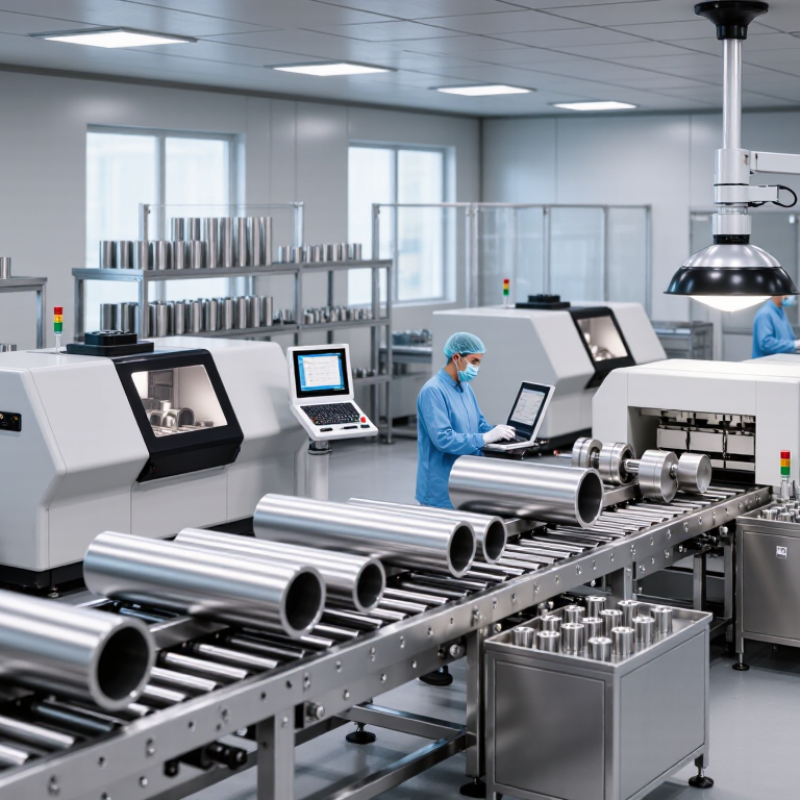
What Medical Metal Extrusion Suppliers Provide
Medical metal extrusion suppliers provide more than shaped tubing or miniature profiles. They translate a clinical drawing into a controlled manufacturing process. Common materials include stainless steel, titanium, cobalt-chromium, and nickel-based alloys. Each option affects strength, corrosion resistance, weight, and imaging performance. The World Health Organization reports more than two million medical device types worldwide. That scale demands flexible, traceable production.
A capable supplier usually offers design review, alloy selection, prototype extrusion, heat treatment, surface finishing, and precision cutting. Dimensional control matters. A small variation can affect catheter movement, implant fit, or instrument assembly. Suppliers should provide material certificates, lot tracking, inspection records, and process validation. ISO 13485-based quality systems also support controlled documentation and risk management. Clean handling and protective packaging reduce contamination during transport.
Experience appears in practical details. Engineers may review wall thickness before tooling begins. They may also test hardness, tensile strength, surface roughness, and corrosion behavior. However, no extrusion line is perfect. A supplier can satisfy a drawing and still miss a surgeon’s handling preference. That gap requires sample evaluation and honest feedback. According to the WHO Global Atlas of Medical Devices, 2022, device complexity and regulatory needs vary widely between markets. Suppliers therefore provide technical files, change control, and production records suited to each application. More testing is not always better; poorly selected tests can waste time without improving safety.
How China’s Top Medical Metal Extrusion Suppliers Are Evaluated
China Top 10 Medical Metal Extrusion Suppliers
How China’s Top Medical Metal Extrusion Suppliers Are Evaluated
Evaluating medical metal extrusion suppliers requires more than comparing prices. Buyers should examine alloy control, dimensional accuracy, surface quality, and production traceability. A reliable supplier can identify the furnace, extrusion lot, operator, and inspection record behind each batch. Ask for evidence. Documents should include material certificates, process validation records, calibration reports, and quality system certifications relevant to medical manufacturing.
Technical experience appears in practical details. Engineers should explain die design, wall-thickness control, straightness limits, and finishing methods without vague claims. Sample parts deserve close inspection under magnification. Look for scratches, seams, uneven edges, and discoloration. Independent laboratory testing can verify chemical composition, tensile strength, corrosion resistance, and cleanliness. Supplier audits should also review storage areas, equipment maintenance, training records, and corrective-action procedures.
Authority is stronger when certifications match the actual facility and product scope. Buyers should verify certificate numbers and inspect recent audit findings when possible. Reliability also depends on change control, complaint handling, backup equipment, and delivery performance. A polished presentation is not enough. No supplier performs perfectly. Strong candidates disclose process limits, rejected batches, and unresolved risks instead of hiding them. That honesty may reveal more expertise than a long list of certificates. Price still matters, but unstable tolerances or weak traceability can create higher costs during medical device assembly.
China’s Top 10 Medical Metal Extrusion Suppliers
China’s top ten medical metal extrusion suppliers are judged by more than equipment size. Reliable performance begins with controlled billet heating, clean tooling, and stable extrusion speed. Titanium, stainless steel, and cobalt-based alloys demand different process controls. Experienced suppliers understand these differences during production.
The strongest suppliers provide complete material traceability. Each billet should link to heat numbers, inspection records, and production dates. Dimensional checks must cover wall thickness, straightness, surface marks, and internal defects. Skilled teams often use optical measurement, ultrasonic testing, and laboratory analysis. Clean handling matters, especially for components entering controlled medical manufacturing areas.
Supplier selection also requires practical factory experience. Audits should review calibration systems, operator training, corrective actions, and packaging methods. ISO 13485-based quality systems can support stronger process discipline, but certificates alone prove little. Ask for recent inspection samples. Request realistic lead-time data. Good suppliers answer clearly.
No ranking is perfect. A smaller workshop may offer better technical communication than a larger facility. Some suppliers still depend heavily on manual inspection, which can create inconsistent records. Others possess advanced presses but lack medical documentation experience. Buyers should compare evidence, not impressive claims. The right partner balances alloy knowledge, repeatable extrusion, traceability, and responsive problem-solving.
Key Materials, Processes, and Quality Standards
China’s top 10 medical metal extrusion suppliers are often evaluated by their materials, process control, and quality records. Titanium alloys, stainless steel, cobalt-chromium, and nickel-titanium serve different clinical purposes. Titanium offers low density and strong biocompatibility. Stainless steel remains practical for cost-sensitive components. Nitinol requires careful thermal control because shape memory depends on processing history.
Reliable extrusion begins with certified billets and controlled heating. Engineers monitor temperature, extrusion speed, reduction ratio, and die wear. These details influence grain structure and dimensional stability. After extrusion, suppliers may use annealing, straightening, centerless grinding, or electropolishing. Small surface defects can become serious problems in narrow tubes. They should not be ignored.
Quality systems should align with ISO 13485 and relevant ASTM or ISO material standards. Each lot needs chemical analysis, tensile testing, hardness checks, and dimensional inspection. Medical suppliers should also maintain heat-number traceability from raw billet to finished profile. Cleanroom handling may be necessary for selected applications. Documentation matters as much as machinery. A polished certificate cannot replace physical evidence.
Audits should review calibration records, nonconformance reports, and corrective actions. Ask for sample inspection data, not only promises. No supplier is flawless. That limitation deserves attention. Some factories may control extrusion well but provide weaker finishing records. Others may have advanced equipment yet inconsistent communication. A practical assessment compares repeatability, technical support, lead times, and transparent quality evidence before approving production.
China Top 10 Medical Metal Extrusion Suppliers — Key Materials, Processes, and Quality Standards
The chart compares representative medical metals commonly processed by extrusion suppliers. Titanium alloy Ti-6Al-4V ELI is widely specified under ASTM F136, 316L stainless steel under ASTM F138, cobalt-chromium-molybdenum alloy under ASTM F75, and nickel-titanium under ASTM F2063. Supplier qualification typically also considers ISO 13485 quality management, ISO 10993 biological evaluation, dimensional control, traceability, and surface-finish inspection.
How to Select the Right Supplier for Your Medical Project
China Top 10 Medical Metal Extrusion Suppliers
Selecting a medical metal extrusion supplier requires more than comparing prices. Grand View Research valued the global medical devices market at approximately USD 512.29 billion in 2022. It also projected a 5.5% CAGR through 2030. This growth increases pressure on suppliers to deliver stable quality, not just attractive samples.
Check whether each supplier controls alloy certificates, extrusion parameters, heat treatment, and dimensional inspection. Ask for traceability from billet to packaged component. A capable factory should explain its tolerance data clearly. It should also provide process validation records, corrective-action reports, and clean handling procedures. ISO 13485 alignment matters because the standard emphasizes risk-based quality management for medical devices. Certification alone is insufficient. Audit the actual production line.
Request sample profiles with thin walls, narrow channels, or complex cross-sections. Measure them independently with calibrated equipment. Review surface scratches under realistic lighting. A perfect sample may hide unstable production. That is an uncomfortable possibility, but it deserves attention. The ISO Survey 2023 reported more than 1.5 million ISO management-system certificates worldwide, showing how common certification has become. Therefore, verify certificate scope, site address, and renewal status. Compare lead times, minimum order quantities, tooling ownership, and engineering response speed. A smaller supplier may communicate better, yet lack backup capacity. A large supplier may offer equipment, but respond slowly. The right choice depends on evidence, repeatability, and the risks your medical project cannot tolerate.
China Top 10 Medical Metal Extrusion Suppliers - How to Select the Right Supplier for Your Medical Project
An anonymized supplier-screening matrix based on commonly used medical metal extrusion capabilities, quality documentation, material controls, and project-fit criteria.
| Rank | Anonymized Supplier Profile | Medical Metals Commonly Supported | Best-Fit Medical Applications | Typical Extrusion Capability to Verify | Typical Dimensional Targets to Verify | Quality and Regulatory Evidence to Request | Key Manufacturing and Inspection Controls | Indicative Development Lead Time | Recommended Selection Focus |
|---|---|---|---|---|---|---|---|---|---|
| 1 | Profile A High-precision titanium specialist |
Titanium Grade 2 Ti-6Al-4V Ti-6Al-4V ELI | Orthopedic implant components, bone plates, surgical instruments, and structural medical parts. | Small and medium solid or hollow profiles; confirm billet diameter, maximum profile envelope, and minimum wall thickness. | Confirm process capability for profile dimensions, straightness, wall thickness, and surface condition; final values depend on geometry and alloy. | ISO 13485 certificate, ISO 9001 certificate, material certificates to ASTM or ISO specifications, full lot traceability, and change-control procedure. | Vacuum or controlled-atmosphere heat treatment, alloy verification, ultrasonic or eddy-current inspection where applicable, dimensional CMM inspection, and surface-finish records. | Approximately 6–12 weeks for tooling, first articles, and process approval. | Prioritize titanium experience, oxygen and nitrogen control, repeatability of thin walls, and documented biocompatibility support. |
| 2 | Profile B Stainless-steel precision extruder |
316L Stainless Steel 17-4 PH Stainless Steel 304 Stainless Steel | Surgical tools, endoscope components, guidewire accessories, instrument shafts, and reusable device parts. | Solid, semi-hollow, and custom miniature profiles; confirm whether the supplier supports stainless-steel hot extrusion or cold drawing after extrusion. | Verify dimensional control after drawing, straightening, machining, and passivation; tolerances should be agreed on the approved drawing. | ISO 13485 or equivalent medical-device quality system, heat-lot traceability, ASTM A276 or relevant material documentation, and passivation records. | Steel grade identification, hardness testing, tensile testing, pickling or passivation control, burr inspection, and corrosion-resistance verification when specified. | Approximately 5–10 weeks for tooling and qualification, depending on profile complexity. | Evaluate corrosion control, internal cleanliness, cold-work capability, and experience with repeated cleaning and sterilization cycles. |
| 3 | Profile C Nickel-titanium shape-memory specialist |
Nitinol NiTi NiTi-based alloys | Vascular-device components, orthodontic components, minimally invasive instruments, and shape-memory assemblies. | Small-diameter solid or hollow profiles; confirm composition range, transformation-temperature control, and downstream drawing capability. | Require control of diameter, wall thickness, ovality, surface defects, nickel release risk, and functional transformation behavior. | Material chemistry certificates, heat-treatment records, ISO 13485 evidence, nickel-release or extractables data where applicable, and complete lot traceability. | Transformation-temperature testing, differential scanning calorimetry when required, surface inspection, chemical analysis, dimensional inspection, and fatigue-test support. | Approximately 8–16 weeks because of specialized tooling and functional qualification. | Focus on transformation-temperature repeatability, surface quality, nickel control, fatigue performance, and validated heat-treatment recipes. |
| 4 | Profile D Cobalt-chromium implant-material supplier |
Co-Cr-Mo Alloy Cobalt-Chromium Alloys | Dental frameworks, orthopedic components, implant structures, and wear-resistant medical parts. | Confirm availability of extrusion, forging, or hybrid forming routes because cobalt-chromium alloys can require specialized processing. | Verify dimensional repeatability, grain structure, hardness, surface condition, and machining allowance after forming. | Material certificates to applicable ASTM or ISO requirements, ISO 13485 evidence, furnace calibration records, and lot-level chemical traceability. | Vacuum or controlled-atmosphere processing, metallographic examination, hardness testing, chemical analysis, and nonconformance control. | Approximately 8–16 weeks for material sourcing, tooling, and qualification. | Assess metallurgical expertise, crack prevention, heat-treatment control, machining compatibility, and implant-grade documentation. |
| 5 | Profile E Micro-extrusion and miniature-profile supplier |
316L Stainless Steel Titanium Nitinol | Catheter components, minimally invasive instruments, micro-tubing, guidewire parts, and diagnostic-device assemblies. | Micro-tubing and miniature profiles; confirm minimum outer diameter, minimum wall thickness, concentricity, and achievable length. | Specify diameter, ovality, concentricity, roughness, and burr limits on the drawing; optical measurement is commonly required for small profiles. | ISO 13485, calibrated optical inspection equipment, material traceability, process validation records, and documented clean-handling procedures. | Laser or optical dimensional measurement, microscopic surface inspection, particulate control, cut-end inspection, and controlled packaging. | Approximately 8–18 weeks for miniature tooling and first-article approval. | Choose based on micro-dimension stability, internal-surface cleanliness, cut-end quality, inspection resolution, and low-volume flexibility. |
| 6 | Profile F Medical aluminum profile supplier |
6061 Aluminum 6063 Aluminum Aluminum Alloys | Diagnostic equipment frames, imaging-system components, rehabilitation equipment, and non-implantable device housings. | Medium and large solid or hollow profiles; confirm extrusion press capacity, maximum circumscribed circle, and post-extrusion straightening limits. | Verify dimensional tolerances after aging, anodizing, machining, or other finishing operations; surface appearance may change after treatment. | ISO 9001 or ISO 13485 depending on intended use, alloy certificates, process-control plans, coating records, and inspection reports. | Alloy identification, hardness testing, aging control, straightness inspection, anodizing-thickness testing, and cosmetic surface inspection. | Approximately 4–8 weeks for standard alloys and 6–12 weeks for custom tooling. | Best for non-implantable products; evaluate corrosion protection, finishing consistency, structural strength, and total cost. |
| 7 | Profile G Multi-metal extrusion and secondary-processing supplier |
Stainless Steel Titanium Aluminum | Projects requiring extrusion, drawing, cutting, CNC machining, surface treatment, and assembly from one supply chain. | Confirm equipment and validated routes for each alloy; review whether secondary processes are performed internally or outsourced. | Require a single control plan covering extrusion, heat treatment, machining, finishing, and final inspection. | ISO 13485 or ISO 9001, approved-subcontractor controls, supplier-audit records, incoming inspection, and batch traceability across operations. | Process flow documentation, first-article inspection, gauge calibration, in-process inspection, final inspection, and packaging validation. | Approximately 6–14 weeks depending on the number of integrated operations. | Compare total landed cost, supply-chain transparency, subcontractor control, engineering communication, and corrective-action response time. |
| 8 | Profile H Low-volume prototyping supplier |
Titanium Stainless Steel Nickel Alloys | Design verification units, engineering prototypes, pilot builds, and early-stage medical-device development. | Confirm minimum order quantity, prototype tooling options, material availability, and ability to revise dies or drawings quickly. | Use a prototype drawing with clear critical-to-function dimensions, inspection points, and acceptance criteria. | Material certificates, dimensional inspection report, nonconformance report process, controlled drawing revision, and prototype-to-production transition plan. | Rapid dimensional feedback, inspection before shipment, controlled revision management, and documented deviation approval. | Approximately 3–8 weeks for simple profiles; complex prototypes may require longer. | Select for engineering responsiveness, low minimum order quantity, transparent tooling charges, and a clear scale-up path. |
| 9 | Profile I High-volume production supplier |
316L Stainless Steel Titanium Aluminum | Established medical-device programs with stable designs, recurring demand, and strict delivery requirements. | Confirm press capacity, annual production capacity, backup equipment, tooling-life management, and production scheduling controls. | Require statistical process control for critical characteristics and defined action limits for dimensional drift. | ISO 13485, production-part approval documentation, process capability studies, lot traceability, business-continuity plan, and change notification procedure. | SPC, gauge repeatability and reproducibility studies, preventive maintenance, first-piece approval, final inspection, and batch release records. | Approximately 8–20 weeks for industrialization; repeat orders may follow an agreed production schedule. | Evaluate capacity security, process capability, delivery performance, tooling maintenance, and continuity of raw-material supply. |
| 10 | Profile J Clean-finish and sterile-device component supplier |
316L Stainless Steel Titanium Nitinol | Components requiring electropolishing, passivation, deburring, clean packaging, or controlled preparation before assembly. | Confirm extrusion and downstream capabilities for internal surfaces, inaccessible features, thin walls, and controlled cut ends. | Define surface roughness, particulate limits, burr limits, cleanliness level, and packaging requirements in the technical specification. | ISO 13485, cleaning-validation records, passivation or electropolishing certificates, particulate-control procedures, and packaging validation. | Surface roughness measurement, visual and microscopic inspection, ionic or particulate testing where required, and controlled-area handling. | Approximately 6–14 weeks depending on cleaning, finishing, and packaging validation requirements. | Prioritize cleanliness, surface integrity, chemical compatibility, packaging protection, and evidence that finishing does not affect dimensions. |
FAQS
They convert clinical drawings into controlled extrusion processes. Services may include alloy selection, tooling, prototyping, heat treatment, finishing, and precision cutting. Documentation is included.
Common choices include stainless steel, titanium, cobalt-chromium, and nickel-based alloys. Each affects strength, weight, corrosion resistance, and imaging behavior. The best choice depends on the application.
Small variations can affect catheter movement, implant fit, or instrument assembly. Suppliers should control wall thickness, straightness, channels, and outer dimensions. A tiny error can matter.
Ask for records linking each component to its billet, extrusion lot, operator, and inspection result. Material certificates and batch records should be available. Missing links create uncertainty.
Request process validation, calibration reports, inspection records, material certificates, and corrective-action documents. Confirm that certifications cover the actual facility and product scope. Paperwork alone proves little.
Measure samples with calibrated equipment. Inspect thin walls, narrow channels, edges, scratches, seams, discoloration, and surface roughness. Use realistic lighting. A perfect sample may hide unstable production.
It can verify composition, tensile strength, hardness, corrosion resistance, and cleanliness. Choose tests related to actual risks. More testing is not automatically better.
Compare tooling ownership, minimum order quantities, lead times, backup equipment, and engineering response speed. A lower price may create higher assembly costs. Reliability deserves equal attention.
Suppliers should explain tolerance limits, rejected batches, process changes, and unresolved risks. No production line is flawless. Honest weaknesses can support better decisions.
Controlled storage and protective packaging reduce scratches and contamination during transport. Buyers should review storage areas, maintenance records, and handling procedures. Packaging details matter.
Conclusion
This article presents a practical overview of China’s top 10 Medical Metal Extrusion suppliers and the value they provide to the healthcare industry. It explains how these suppliers support medical projects through precision profiles, custom components, prototyping, production scaling, surface finishing, and technical consultation. The discussion also outlines the main evaluation criteria, including manufacturing capability, dimensional accuracy, material traceability, quality control, delivery reliability, engineering support, and experience with regulated medical applications.
Readers will also learn about commonly used materials such as titanium, stainless steel, aluminum, and specialized alloys, along with relevant extrusion, machining, heat-treatment, and inspection processes. Key quality expectations include consistent tolerances, documented testing, cleanliness, corrosion resistance, and compliance with applicable medical manufacturing standards. The final section offers guidance on selecting the right supplier by comparing project requirements, material performance, order volume, certification needs, communication, lead times, and long-term cooperation potential.

Blog Tags: