Metal Manufacturing Blog & Resources
Expert technical articles, design guides, and industry news on custom metal solutions.
Top 10 Aluminum Die Casting Manufacturers in China
Table of Contents
- Understanding Aluminum Die Casting and Its Industrial Uses
- How China’s Aluminum Die Casting Industry Is Organized
- Top 10 Aluminum Die Casting Manufacturers in China
- Key Capabilities and Markets of Leading Manufacturers
- How to Compare and Select a Chinese Die Casting Supplier
- FAQS
- Conclusion
- Related Posts
Choosing a Chinese supplier for Aluminum Die Casting involves more than comparing quoted prices. Tooling design, alloy selection, machine capacity, and inspection practices all influence part quality and delivery reliability. A thin-walled electronics housing, for example, can present different filling and cooling challenges from a thick structural bracket. Small details matter. This guide introduces ten manufacturers for buyers beginning that search, while recognizing that no single list fits every project. A company suited to high-volume automotive parts may not be the right match for a short production run or a complex enclosure.
Use the profiles as a starting point, not a final verdict. Ask each supplier about its experience with your part geometry, available casting-machine tonnage, secondary machining, surface finishing, and quality checks. Request relevant examples, sample inspection records, and clear information about tooling ownership and lead times. Then compare responses against your drawings, material requirements, and expected order volume. Claims on a website can sound polished. Details are more useful. Even a capable factory may have limitations, and published information may not answer every question. Confirm critical specifications directly, and assess whether communication is precise and consistent. The manufacturers in this overview offer options to investigate, not a substitute for careful qualification. A little extra checking can prevent expensive surprises later.
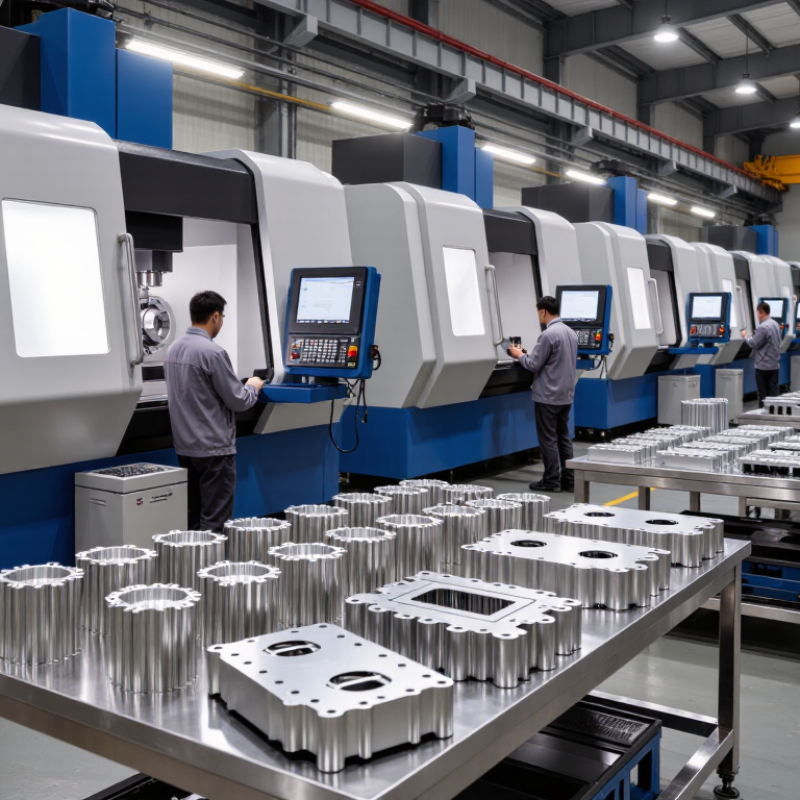
Understanding Aluminum Die Casting and Its Industrial Uses
Aluminum die casting forces molten aluminum into a reusable steel mold under high pressure. The process can produce detailed shapes with thin walls and consistent dimensions, making it useful for large production runs. It also reduces part weight compared with many iron components. Useful—but not universal.
Common applications include automotive housings, electronic enclosures, lighting components, and industrial machine parts. Aluminum conducts heat well, so cast components may help move heat away from motors or electronic assemblies. Designers still need to account for wall thickness, draft angles, and areas where metal flow may be restricted. Small details matter: a poorly placed rib can complicate filling or create uneven cooling.
Tooling can be expensive, so the process is often less suitable for low quantities or frequent design changes. Porosity may also affect strength or leak-tightness, depending on the part and casting conditions. Manufacturers typically use dimensional checks and suitable tests to verify critical features. Not every part. Choosing a casting method requires trade-offs, and a drawing alone may not reveal how reliably a complex shape will fill.
How China’s Aluminum Die Casting Industry Is Organized
China’s aluminum die-casting industry is organized around regional manufacturing clusters, specialized suppliers, and end-use markets. Foundries often sit near customers in automotive, machinery, and electronics, while nearby firms supply molds, alloys, machining, and testing. This setup can shorten delivery routes. It also makes supplier coordination important.
The China Foundry Association reported total Chinese casting output of about 53.1 million tonnes in 2023. That figure covers all casting materials, not aluminum die castings alone, but it shows the scale of the broader production base. Within it, manufacturers range from high-volume plants with automated cells to smaller shops handling customized components. Capabilities vary: buyers should check alloy control, porosity testing, dimensional inspection, and finishing capacity rather than rely on location alone. The cluster map is useful, but it is not a guarantee of quality.
Tips: Ask for recent inspection records and a sample part. Confirm who handles tooling maintenance and secondary machining. Small details matter.
Sources: China Foundry Association, 2023 casting-industry statistics; International Aluminium Institute, industry data.
Top 10 Aluminum Die Casting Manufacturers in China
China’s aluminum die casting industry includes suppliers with different strengths, from compact housings to larger structural parts. A useful Top 10 comparison should look beyond catalog photos. Check alloy control, tooling capability, machine capacity, and inspection records. These factors affect consistency from the first trial to repeat production. Ask how each manufacturer monitors melt temperature, porosity, and dimensional variation. Small defects matter, especially around sealing faces.
Tips: Share a 2D drawing and 3D model before requesting a quote. Confirm the alloy, annual volume, surface finish, and critical tolerances. Request sample inspection data, not just a verbal assurance. A clear checklist makes comparisons fairer.
A factory visit can reveal die maintenance, shot monitoring, and how operators handle rejected parts. Still, a polished tour is not proof of stable production. Review trial samples and measurement reports, then ask who owns corrective actions when dimensions drift. Some buyers focus heavily on unit price; that can be a mistake. Tooling changes, scrap rates, and delivery consistency also affect the real cost. Even experienced teams may miss a tolerance conflict on the first review, so leave room for engineering feedback before the die is cut.
Key Capabilities and Markets of Leading Manufacturers
China’s leading aluminum die casting manufacturers compete on more than machine size. Strong suppliers combine high-pressure casting, controlled alloy melting, trimming, CNC machining, and inspection under one roof. For thin-walled parts, vacuum-assisted casting can reduce gas porosity; for larger components, stable process control matters as much as press tonnage. Buyers should ask for sample inspection records, tooling-life assumptions, and evidence of repeatable tolerances. A glossy factory tour is not enough.
Their main markets include automotive, electric vehicles, telecommunications, and industrial equipment. The IEA’s Global EV Outlook 2024 reports that electric car sales exceeded 14 million in 2023, around 18% of global car sales. The International Aluminium Institute has projected roughly 40% growth in global aluminum demand by 2030 compared with 2020. These trends support demand for motor housings, inverter cases, battery-related structures, and heat-dissipating parts. But forecasts do not guarantee orders. Some suppliers excel at complex prototypes yet struggle with stable mass production; that gap is easy to miss. Evaluate tooling design, porosity control, machining capacity, and traceability against the intended market, not just a quoted unit price.
How to Compare and Select a Chinese Die Casting Supplier
China’s manufacturing scale is substantial, but scale does not prove a supplier can hold tight tolerances. The USGS Mineral Commodity Summaries 2025 estimates China produced 43 million tonnes of primary aluminum in 2024, out of roughly 72 million tonnes worldwide. That figure describes primary metal, not die-casting capacity. Keep the distinction clear.
Compare suppliers using the same drawing, alloy, annual volume, and inspection plan. Ask for machine clamping force, shot-weight range, and examples of similar wall thicknesses. For a thin-walled housing, inspect cut samples for porosity and review machining datums against the drawing. Request recent dimensional records and process-capability data, not just a polished sample. A spreadsheet can flatter a factory.
Check how the supplier handles tooling changes, rejected parts, and production ramp-up. Ask to see calibration records and how operators react when measurements drift. Quality certificates are useful, but they do not replace process evidence. I still find lead time easy to overvalue; a fast quote means little if tooling corrections take weeks. Keep one unresolved risk visible in your comparison, rather than forcing every supplier into a neat score.
FAQS
Manufacturers often cluster near automotive, machinery, and electronics customers. Nearby suppliers may provide molds, alloys, machining, and testing.
No. A nearby factory may still lack strong inspection or process control. Check capabilities directly.
China produced about 53.1 million tonnes of castings in 2023. That figure includes all casting materials, not just aluminum die castings.
Ask for recent inspection records and a sample part. Check alloy control, porosity testing, dimensional inspection, and finishing capacity. Small details matter.
High-pressure casting, controlled alloy melting, trimming, CNC machining, and inspection can be managed under one roof. Vacuum-assisted casting may reduce gas porosity in thin-walled parts.
Key markets include automotive, electric vehicles, telecommunications, and industrial equipment. Typical parts include motor housings, inverter cases, and heat-dissipating components.
Review tooling design, tooling-life assumptions, repeatable tolerances, machining capacity, and traceability. A successful prototype does not prove stable production.
Not always. Forecasts suggest rising aluminum demand, but they cannot guarantee orders or consistent quality. I might focus too much on price without noticing that gap.
Conclusion
This article introduces Aluminum Die Casting and explains why it is widely used to produce precise, durable components for industries such as automotive, electronics, machinery, and consumer goods. It outlines how China’s die-casting sector is organized, from specialized component makers to manufacturers offering design, tooling, casting, machining, and finishing services. The article also surveys ten leading manufacturers in China, focusing on their production strengths, technical capabilities, quality practices, and the markets they serve, without relying on brand names in this summary.
For buyers, choosing a supplier involves more than comparing prices. The article highlights practical factors such as alloy and process expertise, equipment capacity, quality control, engineering support, production lead times, communication, and delivery arrangements. By comparing these capabilities with project requirements, readers can develop a clearer basis for evaluating suppliers and selecting a suitable partner for reliable, cost-effective die-cast components.

Blog Tags: